When you need power where an outlet isn’t, Best Extension Cords For Indoor Use solve the problem without blocking adjacent sockets or forcing furniture away from walls. These cords combine compact plug designs with 3 outlets arranged so bulky plugs fit without crowding.
If you have tight spaces behind a TV or bed, a flat plug in 6 feet works best. For larger rooms or longer distances, reach for 15- to 20-foot cords. All are rated for standard household appliances up to 1625 watts.
What to Compare
Look at three things: cord length (6 feet reaches behind furniture; 15 to 20 feet span larger rooms), plug design (flat profiles fit tight spaces; rotating plugs work at any angle), and outlet count and type (grounded, polarized, or dual-prong compatible).

TROND Rightward Flat Plug Extension Cord 6ft for Small Tight Spaces, White
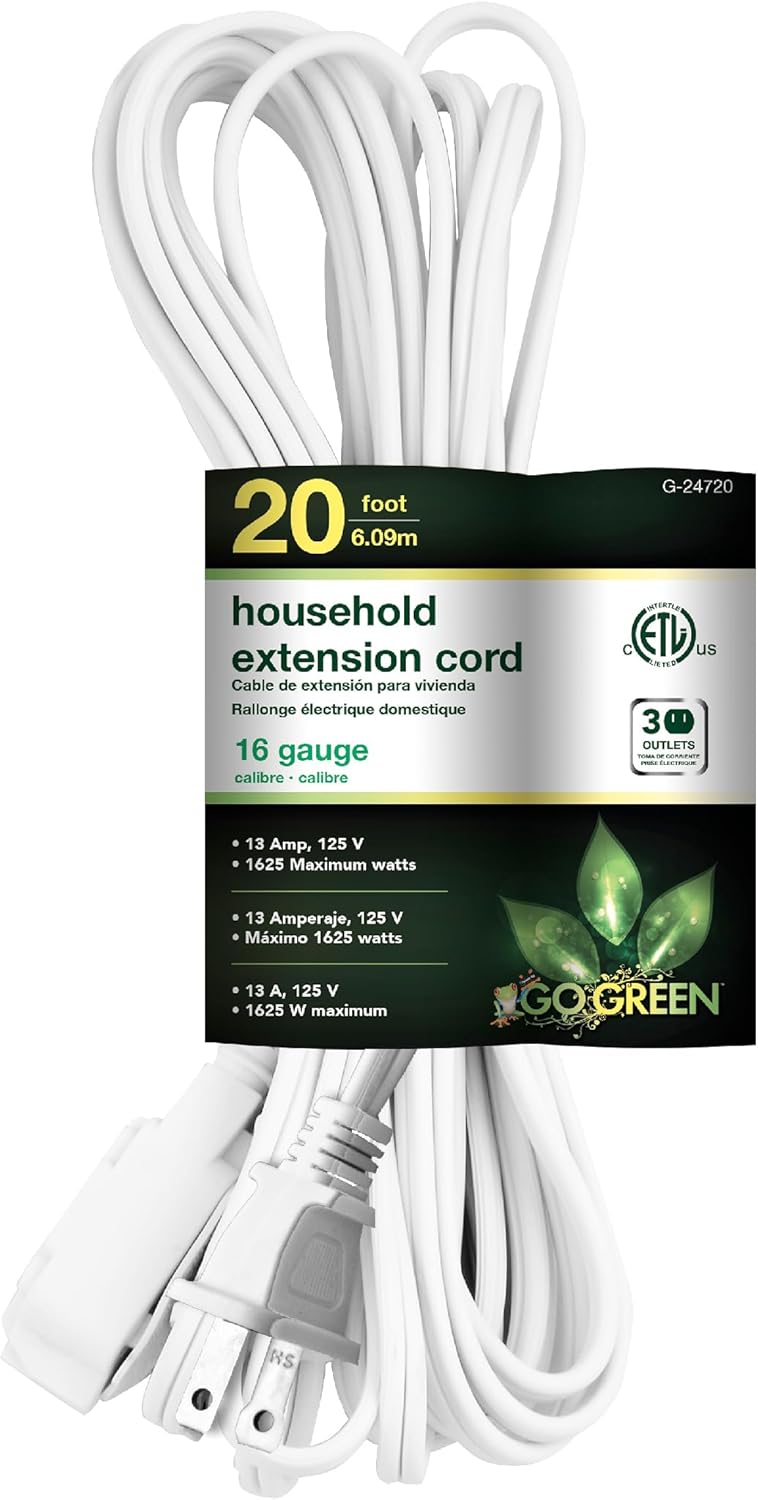
Go Green Power 20ft White Extension Cord, 3 Outlets, 16/2 Gauge, Indoor Use, Child-Safe Co...

TROND 360 Rotating Flat Plug Extension Cord 6ft, 3 AC, ETL Listed, White

Philips Extension Cord, 15 Ft, 3-Outlet Flat Plug Extension Cord

Amazon Basics 3-Prong Extension Cord for Indoor Use, Outlet Extender, Indoor Power Extensi...
Which Cord Fits Your Space
Your room size, outlet location, and how you’ll run the cord matter most. Here’s what to pick based on where and how you’ll use it.
- Tight spaces behind furniture need very low-profile plugs
- Odd-angle outlets benefit from rotating or flexible plug designs
- Homes with small children should prioritize outlet safety covers
- Longer distances require 15- to 20-foot reach
Behind a TV or Bed
The TROND Rightward suits tight spots where a TV or bed sits close to the wall. Its 0.33-inch flat angled plug keeps the cord out of sight, and the 6-foot length reaches most nearby outlets. If your outlet points in an unusual direction, choose the TROND 360 Rotating instead, which swivels 360 degrees to fit any angle.
Protecting Kids in Play Areas
The Go Green 20ft provides child safety covers on each outlet, a feature the other two recommendation picks don’t mention. At 20 feet, it also covers larger playrooms or open-plan spaces where kids roam. If you prefer a shorter cord with grounded outlets, the TROND Rightward or TROND 360 also deliver safety through their design, though they lack dedicated covers.
Across a Room or Along a Baseboard
For a living room stretching from sofa to entertainment center, the Go Green 20ft reaches farther than the 6-foot TROND models. Its flat cable runs quietly along baseboards and under rugs without creating a tripping hazard. The Philips 15ft and Amazon Basics 15ft split the difference if 20 feet is more than you need. For a yard run, look for heavier-gauge extension cords for portable generators.
Our Picks
Choose based on your space and how you’ll run the cord. All three use flame-retardant materials and handle standard household appliances from lamps to blenders. When you’re powering tools or lights across a damp yard, outdoor extension cords with a heavier gauge resist voltage drop over long runs.
Tightest Fit Behind Furniture: TROND Rightward Flat Plug Extension Cord 6ft for: The TROND Rightward’s 0.33-inch flat angled plug slides behind TVs and beds without forcing furniture away from walls. Its 6-foot cord reaches most nearby outlets, and the 3-sided outlet cube lets you plug in multiple devices without crowding. Choose the Go Green or TROND 360 if you need more reach or flexibility in outlet angle.
Longest Reach with Safety: Go Green Power 20ft White Extension Cord: The Go Green 20ft extends across large rooms and runs safely under rugs or along baseboards. Its child-safe outlet covers and kink-free 16-gauge wire make it ideal for families and busy offices. If your space is smaller or your outlets point awkwardly, pick the TROND Rightward or TROND 360 instead.
Flexible Plug at Any Angle: TROND 360 Rotating Flat Plug Extension Cord 6ft: The TROND 360’s patented 360-degree rotating plug fits sockets pointing up, down, or to the side without forcing the cord at an awkward angle. At 6 feet with a cube design, it suits tight spaces with tricky outlet placements. If you need longer reach, the Go Green 20ft covers more distance but lacks this rotation feature.
Questions About Best Extension Cords For Indoor Use
Can I run an extension cord under a rug or along a baseboard?
Yes, if the cord design allows it. The TROND Rightward and Go Green 20ft both feature flat cables that lay flush against baseboards or under rugs without bunching. Standard round cords create tripping hazards and can overheat under carpets. Always check the manufacturer’s instructions for your specific model. Running a cord across a yard or into a garage often calls for thicker-gauge extension cords.
What’s the difference between grounded (3-prong) and 2-prong outlets?
Grounded outlets include a third hole for safety and suit three-prong plugs on larger appliances. The TROND models have grounded outlets; the Go Green has 2-prong outlets. The Amazon Basics accepts both. Check your device’s plug type to match it with the right cord.
How much power can these cords handle?
All five models are rated for 1625 watts at 125 volts and 13 amps, enough for most household devices like lamps, fans, heaters, and phone chargers. Do not plug in multiple high-draw appliances (like two space heaters) that together exceed 1625 watts, or the cord will overheat.
Are these cords safe around children?
The Go Green and Philips both include slide-to-close or safety covers on unused outlets to prevent accidental contact and dust. The TROND and Amazon Basics don’t list dedicated covers, but their outlet design can discourage tampering. Always supervise children near any power source.
Why does one TROND have a tighter socket?
The TROND Rightward’s tight socket is noted in its specs to ensure a secure connection and reduce wiggling that could loosen plugs over time. You’ll need to insert plugs firmly. This is by design for durability, not a defect—other models may grip less tightly.