When you need to run a generator safely away from your home or RV, the right extension cord matters. Best Extension Cord For Generator fall into two categories: heavy-duty 30-amp locking cords for connecting generators to transfer switches, and 15-amp household outlet cords for general outdoor use.
30-amp models suit whole-house backup power. 15-amp cords work for tools, landscaping, and camping gear when you don’t need a dedicated transfer switch.
What to Compare
Reach, amperage, connector type, and temperature range determine which cord fits your generator setup. Longer cords mean more flexibility but require heavier gauge wire to prevent voltage drop.

Champion Power Equipment 25-Foot 30-Amp 125-Volt Fan-Style Generator Extension Cord (L5-30...

50FT 30 Amp Generator Cord 4 Prong, 10AWG 125/250V 3750/7500W STW
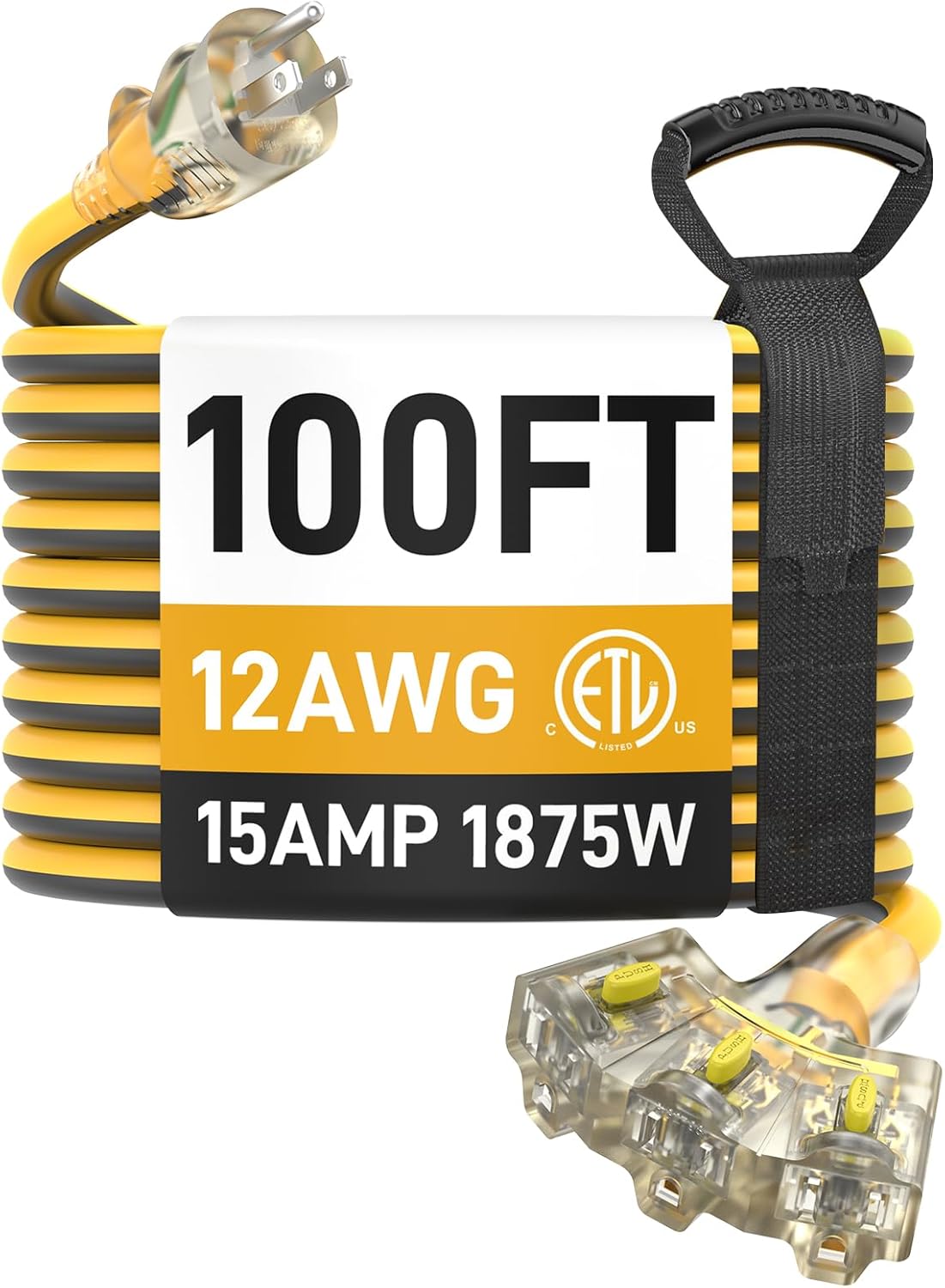
100ft 12/3 Outdoor Extension Cord Heavy Duty 3-Outlet Locking Plug ETL

35FT 30 Amp Generator Extension Cord L14-30P/L14-30R, STW ETL Listed

100 FT 12/3 Outdoor Extension Cord Waterproof, Heavy Duty Power Cord
Choose Your Cord by Scenario
Pick based on what you’re powering and how far your generator sits from that load. Amperage, reach, and connector type all matter.
- Distance: How far must power travel? Longer runs need heavier gauge wire.
- Load: Are you running full-house backup or individual tools?
- Connector: Does your generator and destination both match the plug type?
- Environment: Will the cord sit in rain, extreme cold, or intense sun?
Whole-House Backup Power
The Champion 25-Foot connects a generator directly to a manual transfer switch using its 30-amp locking outlet. It keeps your generator close, moving only 25 feet, which reduces voltage drop and lets you monitor equipment easily. If you need extra distance, the PlugSaf 50-Foot or POWGRN 35-Foot extend reach while holding the same 30-amp rating.
RV and Outdoor Camping
The PlugSaf 50-Foot L14-30 cord lets you plug a portable generator into an RV’s manual transfer switch while camping. Its 50-foot reach puts the generator downwind and away from sleeping areas. The POWGRN 35-Foot offers similar specs at a shorter distance if your campsite layout is tighter.
Tool and Equipment Power
The primoWire 100-Foot works for lawn mowers, chainsaws, and landscaping tools that use standard household outlets. Its 100-foot reach lets a generator sit at the property edge, well away from work areas. The POWGRN 100-Foot matches this length and amperage for the same use, with a 3-prong connector. The heavy-duty 100 ft extension cord suits yard work where the generator has to stay well away from the house.
Extended Outdoor Work Areas
When you need to run power 100 feet to a construction site or garden area, the primoWire’s LED power indicator shows whether the cord is live. Its locking plug prevents disconnection from accidental tugging. The POWGRN 100-Foot offers the same distance and LED indicator as an alternative.
Our Top Picks
These three cords represent the best options across typical generator uses. Each is ETL certified or listed and built for outdoor service. Each one suits a different setup, and a wall-mounted extension cord reel can keep long runs tidy in a garage.
Best for Backup Power: Champion Power Equipment 25-Foot 30-Amp 125-Volt Fan-Style: The Champion 25-Foot converts a single 30-amp generator outlet to three standard 15-amp household outlets, so you can plug in multiple devices. Its 10-gauge wire and 125-volt rating handle most household backups within a short distance. Choose the PlugSaf 50-Foot if you need 50 feet of reach instead of 25.
Longest Heavy-Duty Reach: 50FT 30 Amp Generator Cord 4 Prong: The PlugSaf 50-Foot delivers 30 amps at 125/250 volts across a full 50 feet using 10 AWG pure copper wire, ideal for connecting a generator to a distant RV or transfer switch. Its twist-lock design prevents accidental disconnection in harsh weather. The POWGRN 35-Foot offers a middle-ground distance at 35 feet.
Most Versatile Long Run: 100ft 12/3 Outdoor Extension Cord Heavy Duty 3-Outlet: The primoWire 100-Foot reaches the farthest for general outdoor work, with an LED power indicator and locking plug for safety. Its 15-amp rating suits tools and equipment that use standard household outlets. For the same 100-foot length and features, the POWGRN 100-Foot is an alternative with a 3-prong connector.
Frequently Asked Questions
What’s the difference between a 30-amp and 15-amp generator extension cord?
A 30-amp cord like the Champion connects directly to a generator’s 30-amp outlet and links it to a transfer switch for whole-house power. A 15-amp cord like the primoWire connects standard household outlets and works for tools and outdoor equipment. Use 30-amp for backup power systems; use 15-amp for general portable power.
Does cord length affect how much power reaches my equipment?
Yes. Longer cords create voltage drop. The primoWire and POWGRN 100-foot cords use 12 AWG wire to compensate for their length. Shorter 30-amp cords like the Champion use thicker 10 AWG wire. Always fully uncoil the entire cord during use to avoid heat buildup and voltage loss.
Can I use a generator extension cord in freezing weather?
Check the temperature rating. The primoWire stays flexible down to -50°C (-58°F), and the PlugSaf operates to -40°C. The Champion rates down to -10°F. Cold-resistant insulation and flexible wire are essential for winter backup power. Avoid coiling a cold cord tightly, as it can crack. Pick indoor hallway light fixtures with LED bulbs to conserve generator fuel during long outages.
What does IP65 waterproof rating mean?
IP65 means the cord resists rain and moisture from any direction during outdoor use. All five cords here include waterproof, weather-resistant insulation. The PlugSaf, POWGRN 35-foot, and POWGRN 100-foot are specifically rated IP65. Always cover unplugged outlets with dust caps when not in use.
Should I use a locking plug for my generator cord?
Yes, if available. The twist-lock design on the PlugSaf, POWGRN 35-foot, and primoWire prevents the cord from disconnecting under stress or wind. The Champion uses a fan-style connector. Locking plugs keep power steady and protect equipment during bad weather or accidental impact.