Best Light Bulbs For Bright Light means finding bulbs that let you see clearly without the heat and waste of older incandescent technology. These specs show you what brightness, color, and durability actually look like.
Looking for maximum lumens? The daylight 5000K bulbs here split into two groups: 100-watt equivalents that deliver 1500 lumens, and higher-wattage models pushing 2300 to 6000 lumens for spaces that need even more light. All use the standard E26 base that fits any regular fixture.
What to Compare
Brightness jumps up as wattage increases, but so does energy draw. Check lumens, power consumption, lifespan, and whether dimming matters to you, since some models are dimmable and others are not.

evelor 6-Packs A19 LED Light Bulbs,100 Watt Equivalent Daylight 5000K Bright Bulbs Efficie...

12 Pack LED Light Bulbs 100 Watt Equivalent, A19 5000K Daylight White

TJOY 12 Pack LED Light Bulbs, 100 Watt Equivalent A19, Daylight White 5000K
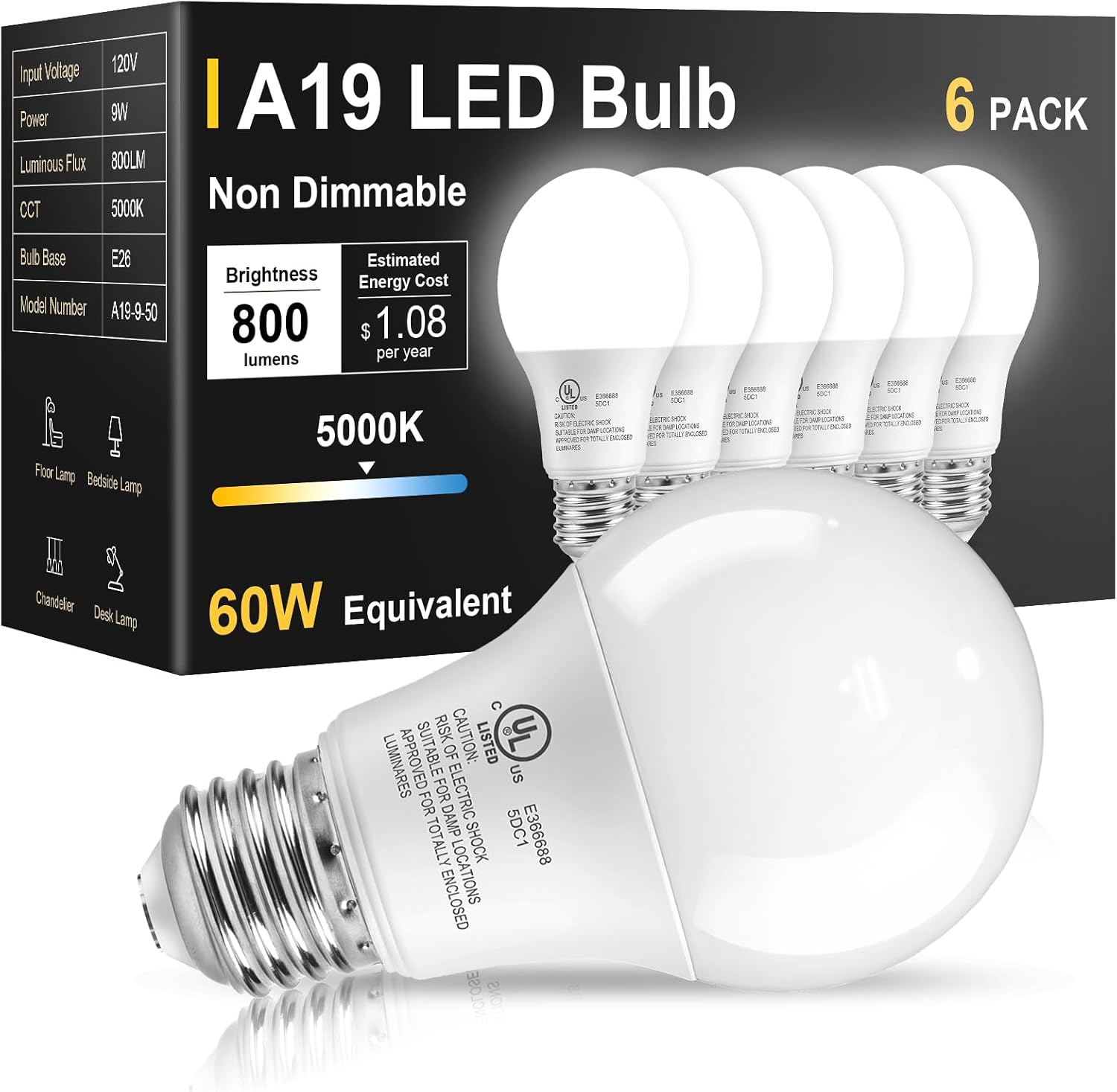
TJOY 6 Pack LED Light Bulbs 60 Watt Equivalent, Daylight White 5000K A19

MAXvolador A19 LED Light Bulbs, 100 Watt Equivalent LED Bulbs, Daylight White 5000K, 1500L...

LED Light Bulbs, 100 Watt Equivalent A19, 13W 5000K Daylight White 1500 Lumens Non-Dimmabl...

E ENERGETIC LIGHTING 150 Watt LED Light Bulb, Super Bright A21 Daylight 5000K, Non-Dimmabl...

Energetic LED Bulbs 150 Watt Equivalent, 2600LM Super Bright Light Bulbs, Daylight 5000K,...

SANSI 400W Equivalent 6000 Lumens Brightest LED Light Bulb
Choosing the Right Brightness for Your Space
Start with where the light goes and what you need to see. Smaller rooms and focused tasks need fewer lumens, while large rooms and commercial spaces call for higher output.
- 800 lumens suits bedrooms, living rooms, and general home lighting
- 1500 lumens handles kitchens, offices, and spaces where detail matters
- 2300-2600 lumens works for larger rooms and retail environments
- 6000 lumens is the peak for industrial or outdoor high-brightness needs
Standard Room Lighting (Bedrooms, Living Rooms)
The 1500-lumen A19 100-watt equivalents like the TJOY A19 100W fit standard fixtures and deliver daylight clarity without overwhelming a typical space. If you prefer lower power draw, the Evelor A19 uses 13 watts versus 15, though brightness stays the same.
Detailed Work Areas (Kitchens, Offices, Workshops)
A 1500-lumen 5000K bulb gives you the color accuracy and brightness to see fine details. All three recommended picks hit these specs; the CHARKEE A19 adds a 280-degree beam angle for wider light coverage compared to standard spread patterns.
Large Spaces and Commercial Settings (Garages, Retail, Warehouses)
Move to 150-watt equivalents with 2300 to 2600 lumens, like the Energetic A21 Dimmable, which lets you adjust brightness to the task. For maximum brightness in a single bulb, the SANSI 400W delivers 6000 lumens, though it draws 40 watts.
Dimming and Control Flexibility
Only the Energetic A21 Dimmable supports dimmer switches, letting you set light from 10 to 100 percent. All other models here are non-dimmable and work best in standard on-off fixtures or settings where constant brightness is desired.
Our Top Picks for Bright Light
These three options represent the most practical choices for homeowners and businesses seeking reliable daylight brightness with strong efficiency and long life.
Lowest Power Draw: evelor 6-Packs A19 LED Light Bulbs: The Evelor A19 100W uses just 13 watts to match a 100-watt incandescent, the most efficient of the 100-watt equivalents here. Pick this if you want to maximize energy savings while staying in the standard 1500-lumen brightness range. Choose CHARKEE or TJOY instead if you need a 12-pack rather than 6-pack.
Widest Light Spread: 12 Pack LED Light Bulbs 100 Watt Equivalent: The CHARKEE A19 100W specifies a 280-degree beam angle, spreading light more uniformly across a room than standard designs. This matters in kitchens, offices, and open living spaces where even coverage prevents dark corners. If beam angle doesn’t concern you, the TJOY A19 100W offers identical lumens and wattage in the same 12-pack size.
Sun-Matched Daylight: TJOY 12 Pack LED Light Bulbs: The TJOY A19 100W emphasizes 5000K color temperature that matches noon sunlight, helping you focus and think clearly in work areas. At 1500 lumens with 15-watt draw and 15000-hour lifespan, it covers all the basics well. Switch to Evelor if you want the 13-watt efficiency advantage or to MAXvolador for the longer 25000-hour lifespan.
Frequently Asked Questions
What does 5000K color temperature actually mean for brightness?
5000K is the color tone, not brightness itself. It delivers a cool, daylight-like white that mimics noon sun, helping you see detail and stay alert. Lumens measure actual brightness. You can pair 5000K with any lumen level—these bulbs range from 800 lumens (dimmer spaces) to 6000 lumens (very bright spaces).
Can I use a non-dimmable LED bulb in a dimmer switch?
No. Only bulbs marked dimmable, like the Energetic A21 Dimmable, work safely on dimmer switches. Non-dimmable LEDs on dimmers may flicker, buzz, or fail early. If your fixture has a dimmer, confirm the bulb supports dimming before purchasing.
How long will a 15000-hour bulb really last?
According to ENERGY STAR conversions, 15000 hours equals about 13.7 years if you run the bulb 3 hours per day. Higher-hour ratings like 25000 or longer mean fewer replacements over decades. Your actual lifespan depends on how many hours daily you actually use the light.
What’s the difference between CRI 80 and CRI 90+?
Color Rendering Index (CRI) measures how accurately a bulb shows true colors. A CRI of 80 is standard and acceptable for most homes. CRI of 90+ is high and makes colors appear richer and more natural—useful in kitchens, retail stores, or anywhere accurate color matters.
Why do some 100-watt equivalent bulbs use 13 watts and others 15 watts?
Different LED designs achieve the same 1500-lumen output at slightly different efficiency levels. A 13-watt bulb is more efficient than a 15-watt one producing the same lumens, saving a small amount of energy over time. The brightness difference is negligible to your eye. Comparing LED light bulbs for home involves weighing these efficiency differences across many product options.