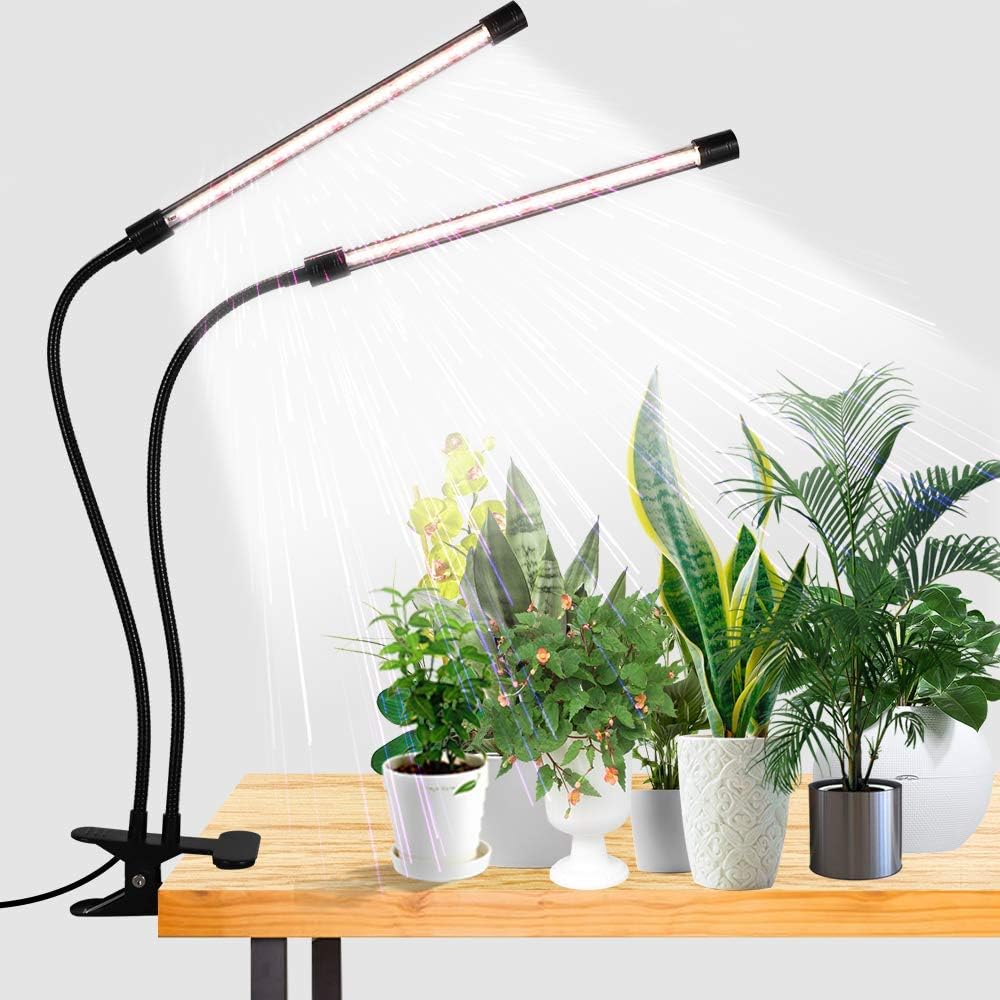
Best Grow Light Bulbs bridge the gap between natural sunlight and indoor growing conditions. All three products here emit 4000K daylight, which mimics solar spectrum across the visible range (400nm to 780nm), supporting plants through every growth stage.
Choose the Briignite A19 if you have a standard lamp socket and one or two plants needing focused light. Pick a SANSI 10W bulb if you prefer proven ceramic heat technology with two bulbs in the pack. Go with the SANSI 36W if you’re setting up a dedicated growing area with multiple plants or higher light demands. Keep grow light bulbs for indoor plants close enough to deliver strong light without scorching leaves.
What to Compare in Grow Light Bulbs
Brightness, power draw, and light output tell you what each bulb delivers. Look at lumens for visible brightness, wattage for what your fixture handles, and PPF (photosynthetic photon flux) for the light plants actually use.

Briignite Grow Light Bulbs, LED Grow Light Bulb A19 Bulb, Full Spectrum

SANSI LED Grow Light Bulbs 2-Pack, 10W Full Spectrum, E26 Base, 4000K

SANSI Grow Lights for Indoor Plants, 36W Plant Lights for Indoor Growing

Grow Light Bulbs, LED Grow Light Bulb A19 Bulb, Full Spectrum

SANSI 350W-Eq. Grow Light Bulbs for Indoor Plants Full Spectrum 32W LED E26
Which Grow Light Fits Your Setup
Your space, existing fixtures, and plant collection determine which bulb to buy. Consider how many plants you’re growing, whether you have standard lamp sockets, and how much light your area can handle.
- Number of plants and their location
- Existing lamp or fixture type
- Room size and growth goals
- Heat sensitivity of your plants
Single Desk Plant in a Standard Lamp
The Briignite A19 screws into any A19 socket and delivers 1000 lumens from just 11 watts. Its 180-degree spread and natural 4000K appearance keep your workspace looking normal while supporting one or two nearby plants. If you want ceramic heat management instead, try the SANSI 10W with an E26 adapter, though you’ll get less visible brightness.
Multiple Plants with E26 Fixtures
The SANSI 10W 2-pack fits E26 sockets and includes two bulbs for spreading light across several plants. Its ceramic heat sink handles continuous operation and reduces heat stress on foliage. The Briignite A19 covers fewer plants but brighter in a single spot.
Serious Growing or Large Spaces
The SANSI 36W delivers 65.6 µmol/s of light output—nearly four times the Briignite A19—and covers larger areas or more demanding crops. Use it when you’re growing full-cycle plants or filling a dedicated grow zone. The smaller SANSI 10W or Briignite work for supplemental light on fewer plants. The indoor grow lights you choose matter most on shelves that receive little daylight.
Our Picks
Below are three Best Grow Light Bulbs that cover different growing scenarios, ranked by their standout strength. Choosing the right full spectrum grow lights matters most when indoor space and plant type limit your options.
Brightest Single Bulb: Briignite Grow Light Bulbs: The Briignite A19 delivers 1000 lumens while drawing just 11 watts—equivalent to a 100W incandescent per ENERGY STAR—making it ideal for anyone with a standard lamp and a desire for visible, natural-looking light. Choose a SANSI product if you prioritize advanced heat technology over peak brightness.
Proven Heat Management: SANSI LED Grow Light Bulbs 2-Pack: The SANSI 10W uses patented ceramic heat sink technology and comes as a 2-pack with E26 sockets, giving you redundancy and proven reliability through its 25,000-hour lifespan and 5-year service plan. Pick the Briignite A19 if you need higher brightness or don’t have E26 fixtures available.
Maximum Output: SANSI Grow Lights for Indoor Plants: The SANSI 36W generates 65.6 µmol/s of photosynthetic light—the highest of any product here—and covers larger areas or more plants in a dedicated setup. Choose a smaller bulb if you’re growing just one or two plants or space is tight.
Frequently Asked Questions
What does 4000K mean for grow lights?
4000K is the color temperature, appearing as neutral white to your eyes. All three products here emit 4000K, which mimics the solar spectrum across the full visible range (400nm to 780nm), supporting plant growth at any stage. Color temperature differs from color accuracy (CRI), which these specs don’t detail separately.
What’s the difference between PPF and lumens?
Lumens measure visible brightness to human eyes; PPF measures light wavelengths plants actually use for photosynthesis. The Briignite A19 lists 1000 lumens, while all three list PPF in micromoles per second. Higher PPF means more growth light, so the SANSI 36W at 65.6 µmol/s delivers more plant-usable light than the Briignite A19 at 25 µmol/s.
How long do these grow light bulbs last?
All three products specify up to 25,000 hours of lifespan. At 12 hours per day, that’s roughly 5-6 years of continuous growing. The SANSI bulbs include 5-year service guarantees, adding peace of mind beyond the rated lifespan.
Can I use these in my existing lamp?
The Briignite A19 fits standard A19 sockets found in most household lamps. The SANSI 10W and 36W use E26 bases, which fit standard household sockets too, but you’ll need E26 compatible fixtures. Check your lamp’s socket type before buying.
What’s the main difference between the two SANSI products?
Both SANSI products use the same 4000K spectrum and ceramic heat sink technology, but the 36W model draws triple the power and delivers nearly four times the light output (65.6 vs. 16.8 µmol/s PPF). Choose the 10W 2-pack for small spaces or supplemental light; go 36W for dedicated growing areas or higher plant counts. Orchid growers with dim windowsills often look for grow lights for orchids that adjust output over the day.