
Among Best Robotic Vacuum Only, the biggest split is whether a model empties itself into a base or needs its bin emptied by hand, and how well its brushes handle pet hair on carpets and hard floors. Those two points shape how often you will touch the machine.
Before choosing, settle which floors you have, whether pets shed on carpet or tile, how large the home is and how much upkeep you want to do each week. The picks below suit different needs, so match your own floors and mess to the one that fits. The right robot vacuum cleaners can also cover hard floors that need regular wiping, not just sweeping.
Our Top Picks

Carpets and Whole-Home Cleaning: Shark PowerDetect Self-Empty Robot Vacuum AV2820S with HEPA
| Pros | Cons |
|---|---|
|
|
This is a self-emptying robot vacuum that cleans carpets and hard floors across the home, then empties its bin into a 30 day capacity base. Its DirtDetect sensing adjusts suction and passes where debris is hidden, which suits rugs and carpet edges that collect grit. EdgeDetect uses blasts of air to pull dust from baseboards and tight corners into its cleaning path.
It suits homes with mixed carpet and hard floors that need edge work and fewer stalls over thresholds, and where pet hair is a smaller concern. For a stronger focus on pet hair and mapped rooms, the Shark AV2501S is the better choice.
Pet Hair and Mapped Rooms: Shark AV2501S AI Ultra Robot Vacuum
| Pros | Cons |
|---|---|
|
|
This Shark model is a bagless robot vacuum with a self-emptying base that holds up to 30 days of dirt and debris. Its 360° LiDAR maps the home so it can detect and avoid objects day or night, and Matrix Clean runs a grid of passes over the floor. The self-cleaning brushroll and HEPA filtration are aimed at pet hair, dander and dust.
It suits homes with shedding dogs or cats on hard floors and carpets where consistent room-by-room coverage matters. If your main concern is edges and baseboards more than pet hair, the Shark PowerDetect model is the better fit.
Pet Hair With Mopping: Roborock Q7 M5+ Robot Vacuum and Mop with
| Pros | Cons |
|---|---|
|
|
This robot vacuum and mop combines vacuuming and mopping in one pass and uses a 10000Pa suction rating. Its JawScrapers main brush and 0% hair-tangling side brush are designed to resist pet hair wrap, even from long-haired breeds. The RockDock Plus has a 2.7L sealed dust bag, so it needs emptying less often, and PreciSense LiDAR maps rooms for efficient paths.
It suits households with long-haired pets that also want damp mopping on tile, vinyl or sealed wood. Homes that are mostly carpet may be better served by the Shark AV2501S, which focuses on vacuuming with a self-emptying base.
Compare Products
Look at the floor types each model is built for, the bin or base capacity, whether it mops, how it maps rooms and how its brushes handle hair. These are the differences that affect daily cleaning most across these models.
Shark PowerDetect Self-Empty Robot Vacuum AV2820S with HEPA Base
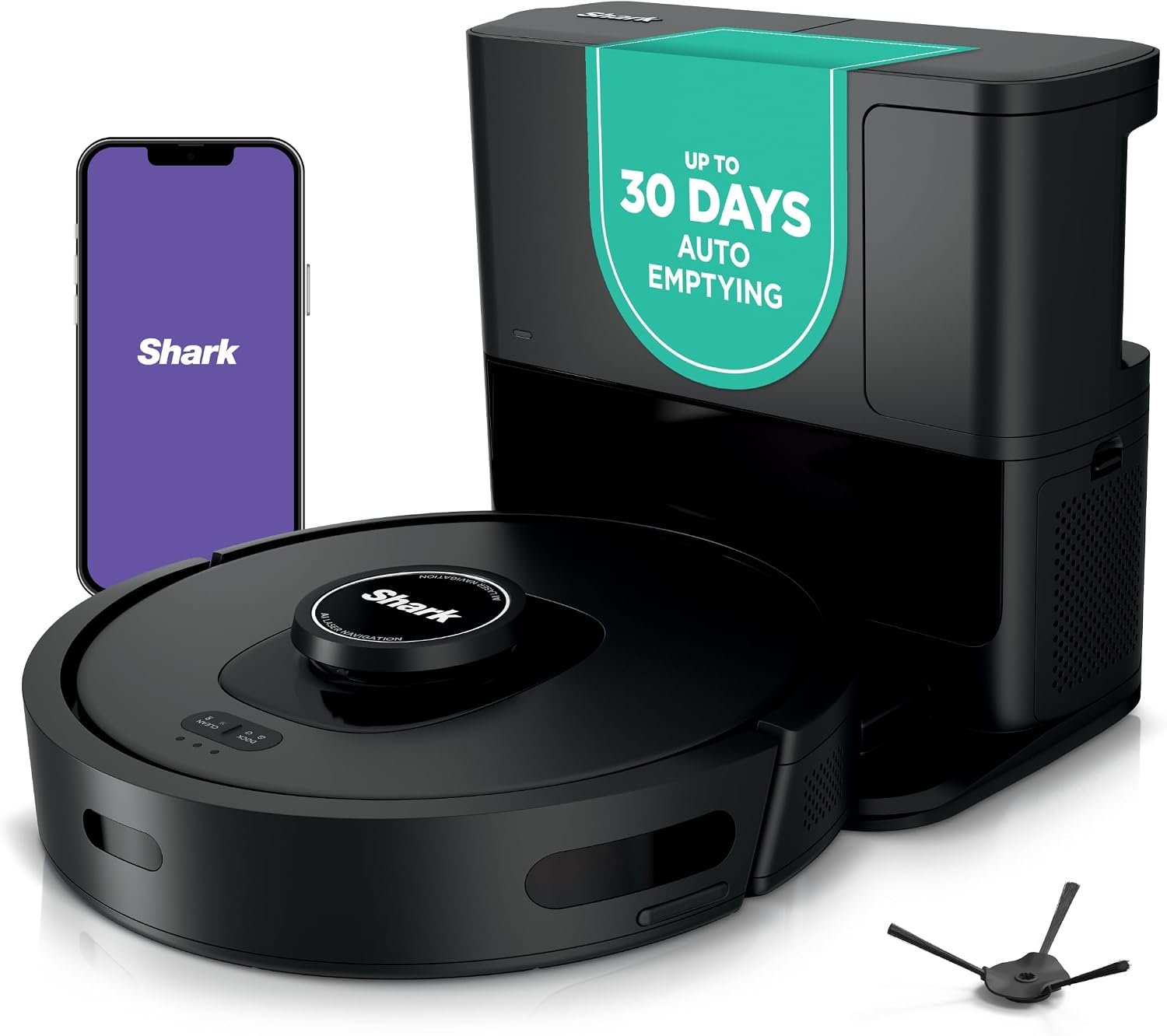
Shark AV2501S AI Ultra Robot Vacuum, with Matrix Clean, Home Mapping, 30-Day Capacity HEPA...
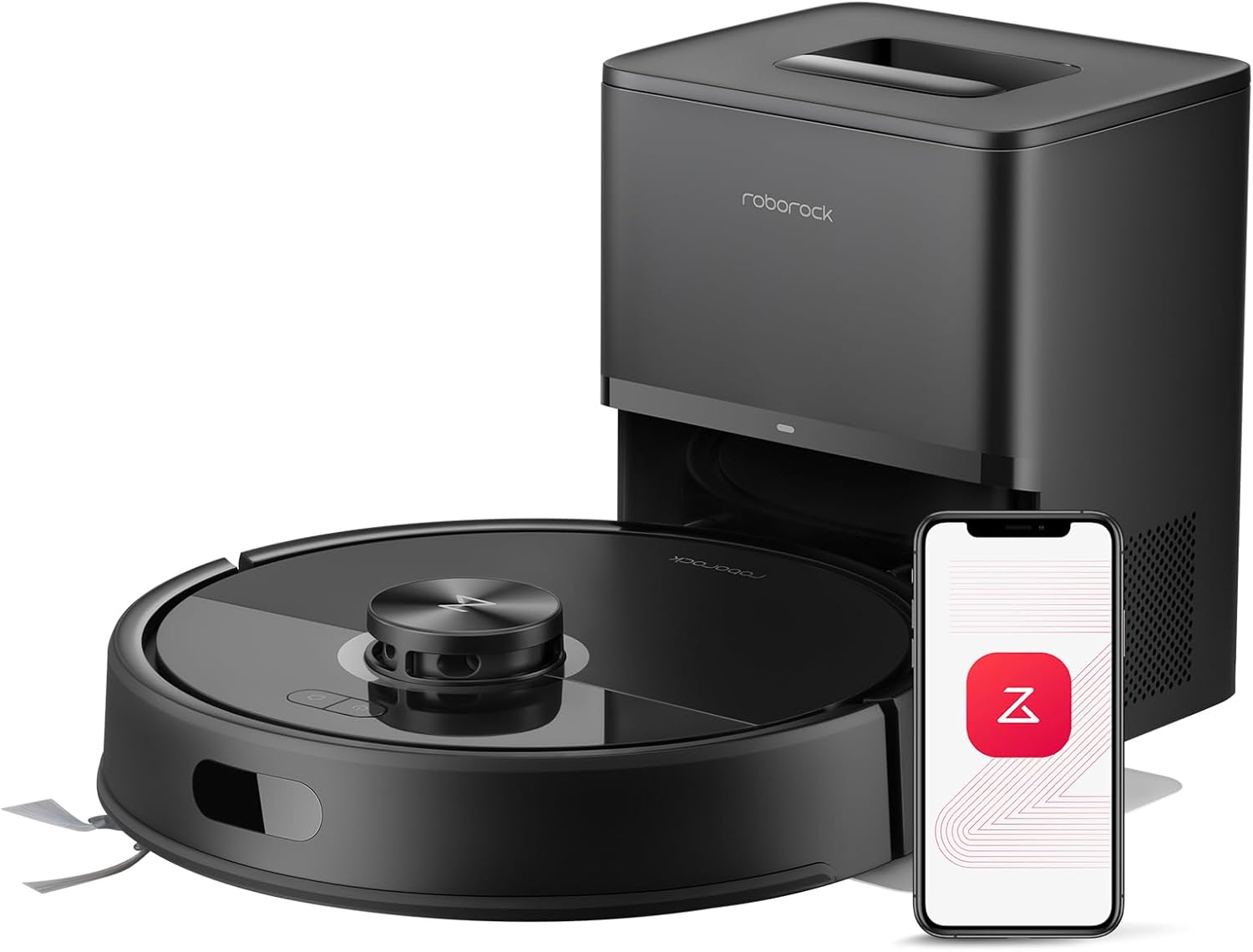
Roborock Q7 M5+ Robot Vacuum and Mop with Self-Empty
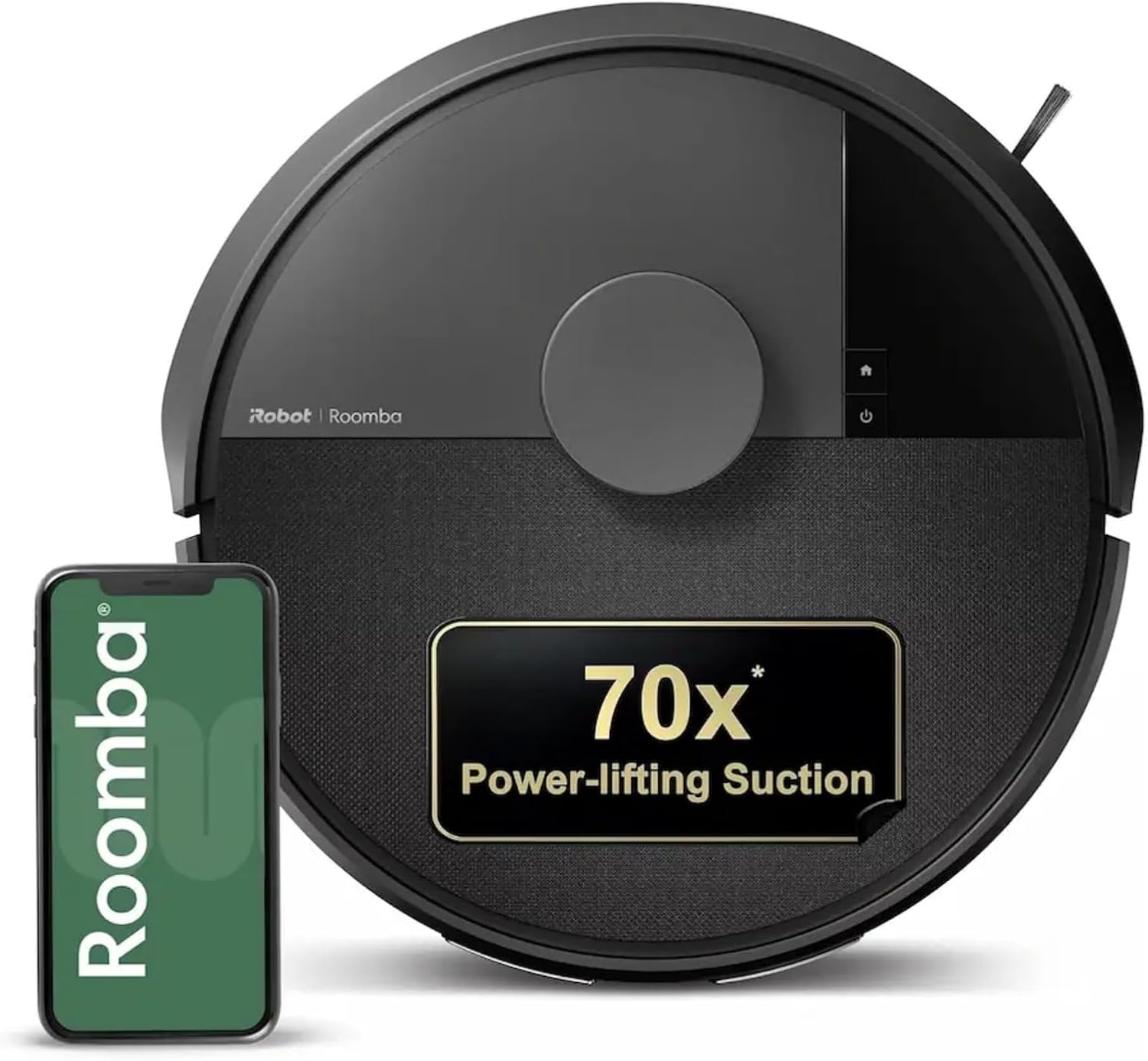
iRobot Roomba 105X Robot Vacuum with Smart LiDAR Mapping

ROPVACNIC Robot Vacuum and Mop Combo with 5200Pa Suction
How to Choose a Robot Vacuum for Pet Hair
Start with your floors and what sheds into them. Pet hair behaves differently on carpet, rugs and hard floors, and the right machine depends on how much of each you have and how often you want to empty it.
Self-Emptying Base Capacity
Look for a base that holds weeks of debris so you empty less often. The Shark PowerDetect and Shark AV2501S both use a 30 day capacity base, and the Roborock Q7 M5+ has a 2.7L sealed dust bag, which suits busy homes with heavy shedding.
Suction for Carpets and Hard Floors
Check the suction rating and how the machine adjusts on different surfaces. The Shark PowerDetect uses DirtDetect to boost suction on hidden debris, and the Roborock Q7 M5+ lists 10000Pa for reaching into carpets and along edges.
Navigation and Mapping
Mapping helps a robot cover each room in order and avoid furniture in low light. The Shark AV2501S uses 360° LiDAR with Matrix Clean grid passes, and the Roborock Q7 M5+ uses PreciSense LiDAR for optimized paths across several rooms.
Anti-Tangle Brushes for Pet Hair
Brushes that resist wrapping cut down on cleaning the roller by hand. The Roborock Q7 M5+ uses a JawScrapers main brush and anti-tangle side brush, and the Shark AV2501S has a self-cleaning brushroll for pet hair.
Robot Vacuum Questions About Pet Hair and Care
How often should a self-emptying robot vacuum base be emptied?
A self-emptying base is designed to hold debris for a set period, and the bases described here are rated at 30 days of capacity. How often you need to check it depends on how much pet hair and dirt your floors collect. Check the bag or bin level on the base regularly and follow the product label for the correct way to replace or empty it.
How do I clean the brushes on a robot vacuum that pets shed on?
Remove the brushroll and side brushes and clear any hair wound around the core, using scissors or a tool if needed. Wipe the housing and check that the brushes spin freely before putting them back. Follow the product label for any cleaning steps specific to the model.
Can a robot vacuum clean carpet and hard floors in the same home?
Yes, most robot vacuums handle both surfaces, but suction and brush settings matter for carpet. Machines with suction boost or sensing for hidden debris tend to work better on rugs, while mopping models are better suited to hard floors. Check the product label for the surfaces each model is designed to clean.
How often should the filter in a robot vacuum be cleaned or replaced?
Filters should be checked often in homes with pets, since fine dust and dander can build up quickly. Follow the product label for the cleaning method and replacement interval, and never run the machine with a damaged or missing filter. Keep spare filters on hand so the robot is not left out of use.
Do robot vacuums with LiDAR mapping need to be set up again after furniture moves?
Many mapping robots adapt to everyday changes, so they can keep cleaning when a chair or table is moved. Large layout changes may require a new map, which the app or manual usually explains how to do. Check the product label for the steps needed for your model.


