
Choosing Best Shop Vac For Drywall Dust comes down to whether you need to pick up settled dust, protect your vacuum filter from fine drywall particles, or stop dust at the moment it leaves the wall. Drywall dust is very fine and spreads quickly, so suction alone does not decide how clean a room stays.
Before you choose, settle which surfaces you will clean, such as bare floors, carpet or ceilings, how much dust a typical job makes, how much floor space your shop or garage allows, and how much upkeep you are willing to do after each session. The picks below suit different needs, from a large wet/dry vac for heavy cleanup to tools that reduce dust before it reaches the vacuum. Smaller cleanups often call for a compact model, which is the focus of this small shop vac guide.
Our Top Picks

Heavy Wet and Dry Jobs: DEWALT DXV09PA 9 Gallon Wet/Dry Vac with Blower
| Pros | Cons |
|---|---|
|
|
The DEWALT DXV09PA is a 9 gallon wet/dry vac with a 5 HP heavy-duty motor. It works for both wet and dry pickups, so it can clear drywall dust from floors and then handle a spill without switching machines. The built-in blower port can clear debris from corners and edges, and the three extra nozzle adaptor converts the unit into an air pump.
The 9 gallon tank holds a large volume of dust before you need to empty it, which reduces the number of trips to the disposal point during a drywall job. The upgraded hose is more durable and flexible than the older version, and the 10 ft power cord with cord wrap extends your reach across a room. The rubberized casters and strong handles help you move it between floors and work areas.
This model suits larger workshops, garages and renovation sites where drywall dust builds up across a whole room. It is a good choice for people who want one machine for dry dust, wet spills and blowing debris. If you need to cut down how often the filter gets dirty, the Dustopper PRO is the better add-on, and if you are only sanding walls at the source, the IMQUALI sander is the better fit.
Protecting Shop Vac Filters: Dustopper PRO Dust Collector with Low-Profile Cyclone
| Pros | Cons |
|---|---|
|
|
The Dustopper PRO is a dust separator that sits on a standard 5-gallon bucket and captures dust and debris before they reach the shop vacuum filter. It uses a low-profile cyclone design, so it does not need a tall cyclone that gets in the way of the rest of your setup. It is made in the USA.
For drywall work, the main benefit is keeping fine debris out of the filter. The company states that it helps maintain airflow and can reduce filter cleaning and replacement costs. Two high-flow sweep elbows with smooth radius help reduce the airflow restriction that sharp-turn fittings can create, and they make it easier to set the unit up around your tools and workspace.
This suits a shop or garage owner who already has a shop vac and wants to protect its filter during repeated drywall sanding or sweeping cleanups. It is a poor fit if you need a standalone vacuum, because it is a separator that works with a vac and bucket. If you are looking for a complete machine, choose the DEWALT DXV09PA, and if your main goal is to stop dust at the sander, the IMQUALI is the better option.
Sanding Drywall at the Source: IMQUALI 2026 Upgraded 8-Amp Popcorn Ceiling Removal Tool
| Pros | Cons |
|---|---|
|
|
The IMQUALI 2026 Upgraded 8-Amp Popcorn Ceiling Removal Tool is an electric drywall sander with a built-in vacuum system and a 10-hole sanding disc. Its dust collection hose and bag capture dust during sanding, which reduces the amount of dust that settles across the room. It has an 8-amp copper motor and seven speeds from 800 to 1800 RPM.
The telescopic extension rod reaches from 3.9 feet to 5.5 feet, so you can adjust it for ceilings and walls at different heights. The sander weighs 8.59 pounds, and the total with rod, dust hose and dust bag is 10 pounds. The detachable chassis helps reach corners, and the 360° LED light strip improves visibility in darker areas.
This suits people who sand drywall, texture or popcorn ceilings and want less dust in the room. Keep the sanding disc parallel to the wall or ceiling to prevent dust leakage, and expect some static in dry conditions, which the maker describes as normal. It is not a shop vac, so pair it with the DEWALT DXV09PA or the Dustopper PRO if you need a vacuum for floor cleanup.
Compare Products
Look at tank or dust capacity, how each tool captures fine dust, the weight and reach of the setup, and whether it is a standalone vacuum or an add-on for dust control.
DEWALT DXV09PA 9 Gallon Wet/Dry Vac with Blower

Dustopper PRO Dust Collector with Low-Profile Cyclone Separator
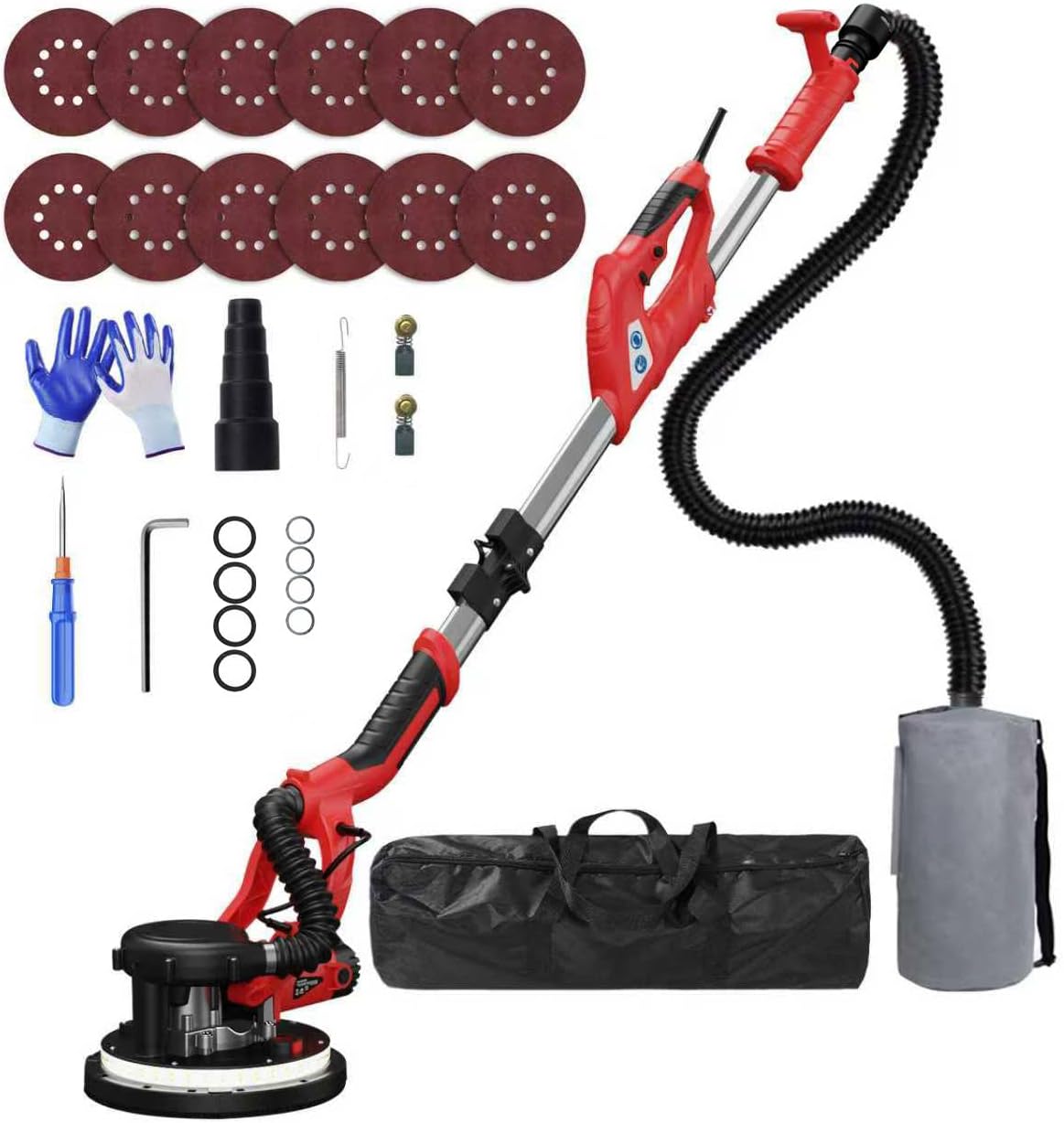
IMQUALI 2026 Upgraded 8-Amp Popcorn Ceiling Removal Tool

DEWALT 10 Gal Stealthsonic Shop Vacuum with Ultra-Quiet

ArmorAll AA255W 2.5 Gal Wet/Dry Utility Vac with 2 Peak HP
Choosing a Shop Vac Setup for Drywall Dust
Drywall dust is fine, so a good setup balances suction, tank size and filter protection. Start with the tasks you do most, whether that is sweeping floors after a job, sanding walls or cleaning up spills in the same space. Setups that must also handle liquid spills and heavy debris fall into a separate category of wet dry shop vacs.
Shop Vac Tank Size
Look for a tank size that matches how much dust a typical job produces. A larger tank, such as the 9 gallon DEWALT DXV09PA, means fewer trips to empty it during long cleanups, but it takes more floor space. Smaller setups suit quick cleanups in a single room.
Filtration for Fine Dust
Fine drywall particles can clog filters quickly, so check whether the unit includes a filter suited to dry dust and how easily you can clean it. A separator such as the Dustopper PRO can keep more debris out of the filter, which helps airflow and reduces how often you clean or replace it.
Dust Separators for Filters
A bucket-top separator works with an existing shop vac and a standard 5-gallon bucket. The Dustopper PRO uses a low-profile cyclone and two high-flow sweep elbows, which suits shops that want to protect the vacuum filter without adding a tall unit.
Sanding Dust Collection
If you sand drywall, a sander with built-in dust collection can reduce the dust that reaches the room. The IMQUALI sander has a vacuum system, a 10-hole sanding disc and a dust bag, which suits sanding ceilings and walls at different heights.
Drywall Dust Questions About Shop Vacs
How do I empty a shop vac after drywall dust?
Empty the tank when it reaches the fill line or when suction drops, and do it outdoors or in a sealed bag to keep fine dust from spreading. Wear a dust mask during emptying. For safety guidance on handling dust and the vacuum, follow the product label.
Can a shop vac pick up drywall dust without clogging the filter?
Fine drywall dust can clog a filter faster than coarse debris, so clean or replace the filter more often during drywall work. A separator placed between the hose and the vacuum can catch more dust before it reaches the filter. Check the filter manual for cleaning steps.
How often should I clean a shop vac filter after drywall work?
Clean the filter after each heavy session and whenever suction weakens, since dust buildup restricts airflow. Tap or rinse the filter as its manual describes and let it dry fully before reinstalling. Replace it when cleaning no longer restores airflow.
Is a wet/dry vac safe for sweeping up fine dust?
A wet/dry vac can pick up dry dust, but fine particles can pass through a worn or damaged filter, so keep the filter in place and in good condition. Do not use the vacuum on wet and dry dust at the same time unless the label allows it. Read the product label for approved uses and safety limits. Some workers who need a lighter option for dust cleanup choose backpack vacuum models for long jobs.
How do I store a shop vac and its hose between jobs?
Empty the tank, clean the filter, and let all parts dry before storing them. Wrap the cord and hose loosely, and keep the nozzles and attachments in a bag or on a storage clip. Store the unit upright in a dry area away from dust-producing work.


