
For most households, pet hair and fine dust decide which robot vacuum is worth buying, so start there when weighing Best Robot Vacuum With Hepa Filter. Some models focus on suction and tangle-resistant brushes, while others add mopping, a larger dock or stronger navigation.
Before choosing, settle which floors you have, whether carpet or hard flooring dominates, how much pet hair you deal with, how big the home is and how often you want to empty a dock. The picks below suit different needs, so match the trade-offs to your own rooms and routine.
Our Top Picks
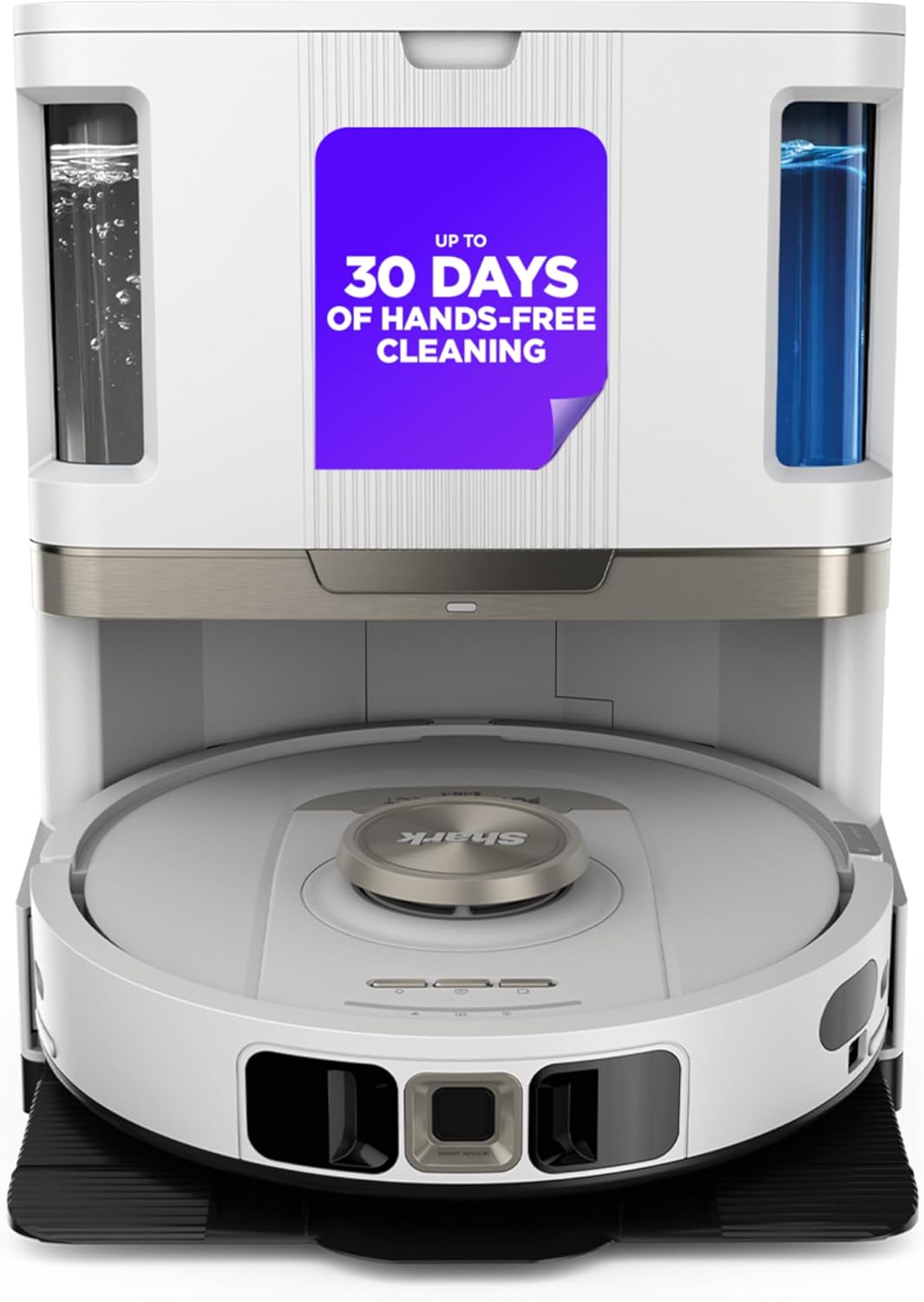
Carpets and Sticky Spills: Shark Stratos Robot Vacuum Mop with 60-Day Self-Empty
| Pros | Cons |
|---|---|
|
|
This Shark model combines vacuuming and sonic mopping in one robot, with a NeverTouch base that empties debris into a 60-day bagless bin. Its sonic mop scrubs up to 100 times per minute to lift stuck-on stains, grime and dried spills, and it avoids carpets on its own. The base also refills water for up to 30 days and washes and dries the mop after each clean, which cuts down on hands-on upkeep.
It suits homes with pets and mixed floors, especially where carpet and hard floors share a space and dried messes are common. Set carpet zones in the SharkClean app so the robot only vacuums there. Pick the Shark AV2501AE instead if you want mapping-led vacuuming without a mop, or the Roborock Q7 M5+ if you want tangle-resistant brushes and a sealed dust bag.
Mapping and Whole-Home Vacuuming: Shark AV2501AE AI Ultra Robot Vacuum with Self-Empty
| Pros | Cons |
|---|---|
|
|
This Shark robot vacuum uses 360° LiDAR to map the home, then follows a matrix grid that takes multiple passes over dirt and debris. It detects and avoids objects in its path, day or night, and adapts when furniture or layouts change. Its self-emptying base holds up to 60 days of debris and uses True HEPA filtration, rated at 99.97% of particles down to 0.3 microns.
It suits pet owners who mainly need dry debris and pet hair removed from carpets and hard floors, with a clear map of the home. Choose the Shark Stratos instead if you also need mopping for stuck-on spills, or the Bissell FlexClean FurForce if you want a vacuum and mop combined with LiDAR navigation.
Pet Hair Without Tangles: Roborock Q7 M5+ Robot Vacuum and Mop with
| Pros | Cons |
|---|---|
|
|
This Roborock robot combines vacuuming and mopping in one pass, with 10000Pa suction and a JawScrapers main brush plus a side brush designed to resist hair wrap, including from long-haired breeds. The sealed 2.7L dust bag in the RockDock Plus allows longer cleaning cycles between emptying. PreciSense LiDAR maps the home for optimized cleaning paths across multiple rooms.
It suits homes with long-haired pets where hair wrap is the main frustration and where several rooms need regular cleaning. Choose the Bissell FlexClean FurForce if you want a stronger motor suction focus with a NeverTangle brush roll, or the Shark Stratos if sonic mopping for stuck-on stains matters more.
Compare Products
Look at how each product handles pet hair, mopping, dust capture and upkeep, since those differences shape daily results more than model names do. Check the bin or dust bag size, whether the base empties itself and how each robot maps the home.
Shark Stratos Robot Vacuum Mop with 60-Day Self-Empty

Shark AV2501AE AI Ultra Robot Vacuum with Self-Empty HEPA Base
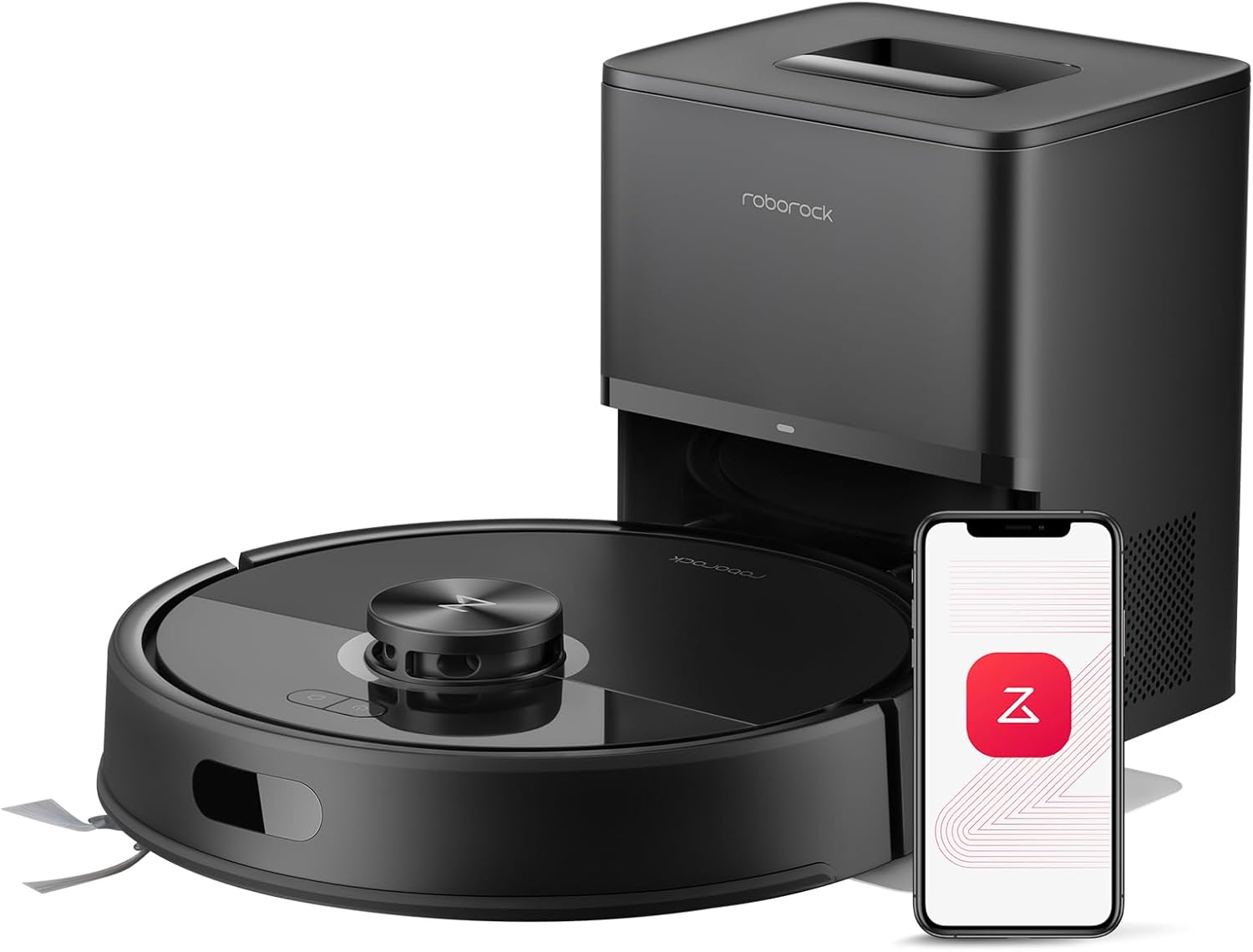
Roborock Q7 M5+ Robot Vacuum and Mop with Self-Empty

Bissell FlexClean FurForce Robot Vac & Mop with LiDAR Navigation

Shark Matrix Plus Robot Vacuum and Mop with Self Empty Base
Choosing a Robot Vacuum for Pet Hair and Allergens
Start with the floors and messes you clean most often, then check filtration, the dock and navigation. A robot that handles pet hair well on your carpet may still need extra attention on hard floors or after spills.
HEPA Filtration Ratings
Look for a stated HEPA rating and the particle size it covers, such as 99.97% down to 0.3 microns. HEPA filtration helps trap fine dust, pollen and pet dander that a basic filter lets back into the air. The Shark AV2501AE and the Bissell FlexClean FurForce both state HEPA filtration in their docks, while the Shark Stratos and Shark Matrix Plus use HEPA with an anti-allergen seal in the base.
Suction and Brushes for Pet Hair
Check suction power and how the brush roll handles hair, since long hair wraps around standard brushes and slows the robot. The Roborock Q7 M5+ lists 10000Pa suction with anti-tangle brushes, and the Bissell FlexClean FurForce uses a NeverTangle brush roll with 2X stronger motor suction. These suit homes with long-haired pets better than basic brush designs.
Self-Emptying Bases and Bin Size
A larger bin means fewer trips to empty the base, which matters in homes with heavy shedding. The Shark Stratos base holds a 60-day bagless bin, the Shark AV2501AE holds up to 60 days, and the Shark Matrix Plus holds up to 30 days. The Roborock Q7 M5+ uses a sealed 2.7L dust bag, which keeps dust contained between emptying.
Navigation, Mapping and Edge Cleaning
Mapping helps a robot cover whole homes in a planned way, while edge features clear debris along walls and tight spaces. The Shark AV2501AE uses 360° LiDAR, the Roborock Q7 M5+ uses PreciSense LiDAR, and the Shark Matrix Plus and Shark Stratos both use air blasts for edges and corners. Pick the navigation style that fits a layout with many rooms or open floors.
Robot Vacuum Questions About HEPA, Pet Hair and Upkeep
Can a robot vacuum with HEPA filter pick up pet hair from carpets?
Yes, most robot vacuums with a HEPA filter pick up pet hair from carpets when suction and the brush roll are designed for hair. Look for a brush that resists wrapping and suction that reaches into carpet pile. Check the product label for the exact floor types and conditions each model is designed for. Check how a robot vacuum for vinyl plank floors handles mixed carpet and hard surfaces at home.
How often should I empty the dust bin on a self-emptying robot vacuum?
Emptying depends on how much pet hair and debris your home produces, but many self-emptying bases hold several weeks of debris before they need attention. Check the bin capacity and the dock’s indicator light. Follow the manufacturer’s instructions for emptying and disposing of debris.
How do I clean a HEPA filter on a robot vacuum base?
Most HEPA filters are removed from the dock or base and tapped or rinsed according to the maintenance steps in the manual. Some filters must be fully dry before they go back in, and others should be replaced rather than washed. Check the product label or manual for the correct method and replacement schedule.
Can a robot vacuum mop wash and dry its own pad?
Some robot mops wash and dry their mop pads in the base after each clean, which reduces hands-on upkeep. Refilling the water tank and emptying the dirty water tray are still regular tasks. Check the product label for the water refill interval and how the base cleans the mop.
Is a robot vacuum safe to run around pets and children?
A robot vacuum can run around pets and children, but it is best to keep cords, small objects and water tanks out of its path and to supervise initial runs. Some models have sensors that help them avoid obstacles. Check the product label for any safety guidance and use limits for your household.


