
Tile floors rarely decide a purchase on their own. Pet hair, dust and how often the dustbin needs emptying shape the choice among Best Robot Vacuum For Tile, so start with those three.
Settle the floor mix first, since tile, hard floors, short carpet and long carpet each change how suction and the mop roller should behave. Then decide how much hair the home produces, how large the space is for mapping, and how much hands-on upkeep you want to avoid. The picks below suit different needs, so match them to your own floors and routine. Households with plenty of deep pile need a sharper focus on robot vacuums for carpets, since fibers trap more hair than hard surfaces.
Our Top Picks

Long Gaps Between Emptying: Tikom L8000 Plus Robot Vacuum and Mop with
| Pros | Cons |
|---|---|
|
|
The Tikom L8000 Plus is a robot vacuum and mop with a self-emptying base and a 3L dustbag that holds weeks of debris. Its suction rises to 6000 Pa on carpet, which gives stronger passes where debris is heavier. A 360° LiDAR scan builds maps, saves up to 5 multi-floor maps and works around walls and stairs. Sweeping and mopping run together, with 3 suction levels and 3 water flow settings for tile.
It suits tile-first homes with pets that want fewer bin trips and schedules set from an app or voice. Rooms with carpet need the mop holder removed or a no-go zone set during mop mode. For a pet-heavy home where long hair is the main problem, Eufy E25 is the better fit.
Pet Hair and Corners: Eufy E25 Robot Vacuum and Mop for Pet
| Pros | Cons |
|---|---|
|
|
The Eufy E25 pairs a mop roller with a station that refreshes it twice per second with clean water, which suits tile grout and kitchen spills. Its DuoSpiral anti-tangle brushes are built to keep hair and fur from wrapping, and its 20,000 Pa suction lifts embedded dirt and pet hair from carpet fibers. The CornerRover arm extends to scrub baseboards, furniture legs and tight corners. The station empties the bag, washes the roller, dries it at 50°C and auto-refills water.
It suits tile kitchens, pet-hair homes and households that want hands-free upkeep for about 75 days. The 10.8mm mop lift protects carpets and the 21mm climb helps it cross thresholds, but longer carpets need more care. For a mapping-led choice, Tikom L8000 Plus fits best. For a larger roller on very long pet hair, Eufy C28 is the better option.
Multi-Pet Homes on Tile: Eufy C28 Robot Vacuum Cleaner and Mop with
| Pros | Cons |
|---|---|
|
|
The Eufy C28 uses a 28cm HydroJet roller with 24 water ports that spins at 270 RPM, and a built-in scraper moves dirt into a separate tank. Its DuoSpiral brush handles hair up to 30 cm without wrapping around the roller. Turbo suction reaches 15,000 Pa, and carpets get a boost automatically. LiDAR avoids obstacles 3×3×3cm and up without cameras, and the station handles dust, mop washing, drying and wastewater for up to 75 days.
It suits multi-pet families and tile floors where a wide mop roller and camera-free navigation matter. Its suction is lower than Eufy E25, so choose that model if carpets collect the heaviest hair. The mop lifts 10.8mm on short carpets, so it is best used where the floors are mostly hard.
Compare Products
Compare these on floor mix, suction, dustbin or bag life, mop roller design and how each robot finds its way around. Look at the station too, since it decides how often you need to touch the robot.
Tikom L8000 Plus Robot Vacuum and Mop with Self-Emptying Base

Eufy E25 Robot Vacuum and Mop for Pet Hair with HydroJet Roller

Eufy C28 Robot Vacuum Cleaner and Mop with HydroJet

Tikom G8000 Max Robot Vacuum and Mop Combo with 5000Pa Suction
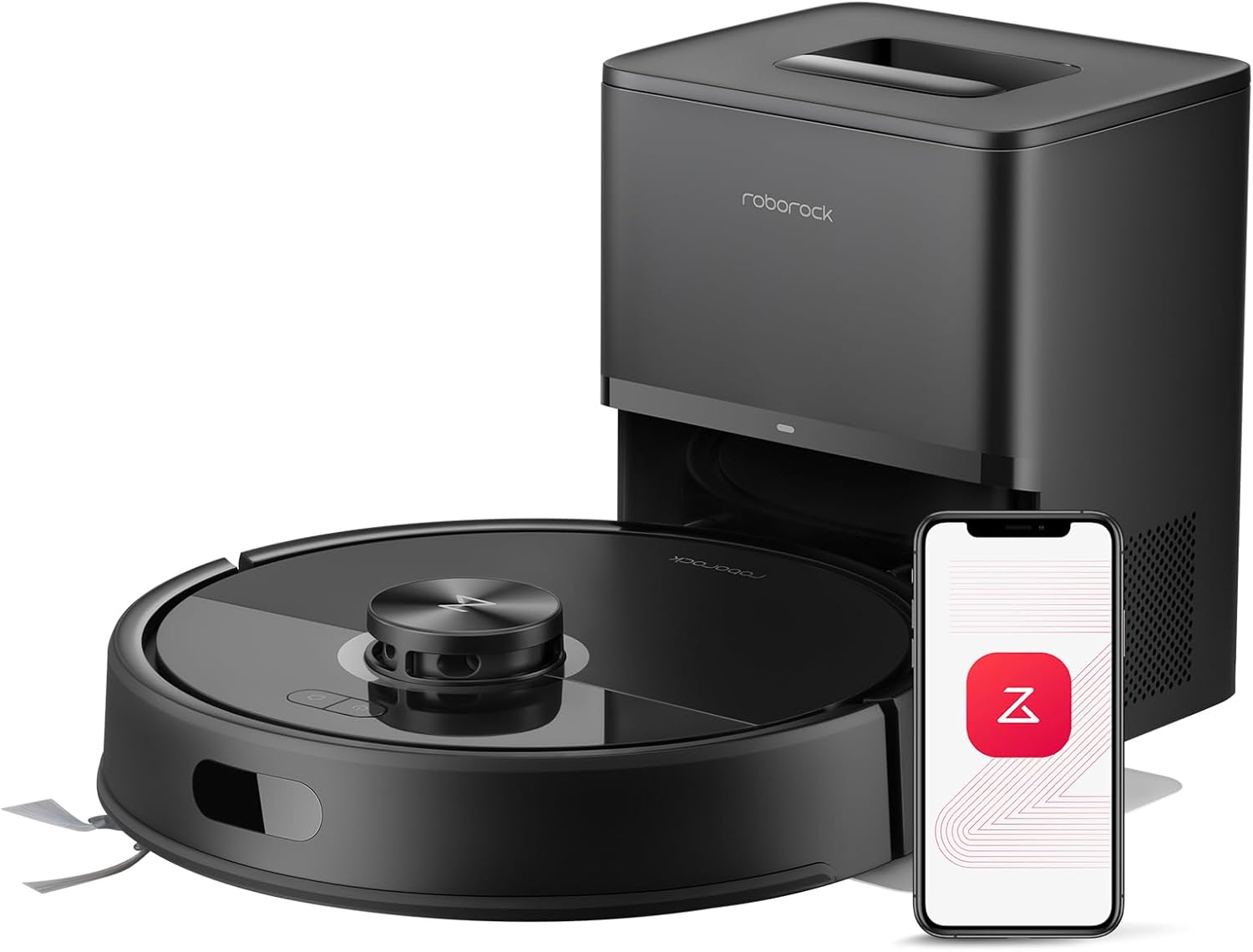
Roborock Q7 M5+ Robot Vacuum and Mop with Self-Empty
Choosing a Robot Vacuum for Tile Floors
Start with the floor mix, because a robot that handles tile well may still need settings for carpet. Note whether the home is mostly hard floors, tile, short carpet or long carpet, and whether the robot offers mop lift and no-go zones. Tile, hard floors and short carpet are the surfaces that suit a robot mop best across these products.
Self-Emptying Dustbin Capacity
Look at the dustbag or dustbin size and how long the station can run before you need to change it. A 3L bag that lasts weeks suits pet-heavy homes, while a smaller bin needs more checks. Tikom L8000 Plus and Eufy E25 both use 3L bags, and Eufy C28 pairs its 3L bag with a 75-day station. Pet owners with heavy shedding often choose a robot vacuum with hands-free emptying.
Suction Power on Tile and Carpet
Check the Pa rating and whether suction rises automatically on carpet. Higher suction helps with embedded pet hair and crumbs, but tile mainly needs steady sweeping. Eufy E25 has 20,000 Pa, Eufy C28 has 15,000 Pa with an automatic carpet boost, and Tikom L8000 Plus rises to 6000 Pa on carpet.
Mop Roller and Water Control
Look for a mop roller that is washed or refreshed by the station and water settings you can adjust for tile. A roller that stays clean keeps grout and spills from spreading across the floor. Eufy E25 refreshes its roller twice per second, Eufy C28 spins its roller at 270 RPM with a scraper, and Tikom L8000 Plus offers 3 water flow settings.
Navigation and Mapping for Multi-Room Homes
Mapping decides how well the robot covers a home and avoids furniture, pet bowls and stairs. LiDAR systems build maps for planned cleaning, and no-go zones keep the robot away from rugs or carpet during mop runs. Tikom L8000 Plus saves up to 5 floor maps, and Eufy C28 uses LiDAR without cameras to avoid obstacles.
Robot Vacuum Questions for Tile and Pet Homes
How often should a self-emptying dustbag be changed?
Bag life depends on how much debris and pet hair the robot picks up. Some of these stations are designed to run for weeks or up to about 75 days before the bag needs changing. Check the station’s indicator and the product label for the exact replacement guidance.
Can a robot vacuum mop tile floors without leaving water behind?
A robot mop works best on tile when the water flow is set low enough to leave the floor damp rather than wet. Adjust the water level in the app or on the robot before each run. Wipe up any standing water after spills to protect grout and floor edges.
Do mop rollers on a robot vacuum need to be washed by hand?
Some stations wash and dry the mop roller automatically, while others leave the roller for manual cleaning. Check the roller for trapped hair and debris after each run. Follow the product label for the correct cleaning steps.
What is a no-go zone and when should you set one?
A no-go zone is an area on the map that the robot will not enter. Set one around rugs, long carpet or pet bowls when mopping so the mop does not spread water onto carpet. Zones are usually set in the app after the first map is saved.
Can a robot vacuum pick up pet hair from tile and carpet together?
Most robot vacuums can pick up pet hair from tile, but long hair can wrap around brush rolls if the brushes are not designed for it. Check the brush design and suction rating for the type of hair in your home. Clean the brushes and roller regularly to keep suction steady. Dog owners with heavy shedding often look for robot mops for dog hair.


