
Most clothing stains need a fast, targeted treatment, and the form of the product matters as much as the formula when shopping for Best Laundry Spot Cleaner. A spray covers a wide area, a gel stick works on one mark, and a booster goes into the wash itself, so the stain type and the size of the mark should guide the choice.
Before choosing, settle which fabrics you wash, how often small stains appear, and whether you want a spot treatment, a wash additive or both. The picks below suit different needs, from quick pretreatment of a single mark to a scent-free addition for whole loads.
Our Top Picks

Everyday Spray Pretreatment: Shout Triple-Acting Active Enzyme Laundry Stain Remover
| Pros | Cons |
|---|---|
|
|
The Shout Triple-Acting Active Enzyme Laundry Stain Remover Spray is a spray with an enzyme formula, as its title states. Its spray form lets you cover a larger stained area in one pass before the wash. That makes it practical when a stain spreads across a shirt front or a pair of trousers.
Shout suits households that treat stains on everyday washable clothing and want to pretreat before the wash. Anyone who needs a precise application on one small mark may prefer the OxiClean gel stick, while a wash booster such as the DirtyLabs option suits people who want an addition for the whole load.
Small Targeted Spot Treatment: OxiClean Max Force Laundry Stain Remover Gel Stick
| Pros | Cons |
|---|---|
|
|
The OxiClean Max Force Laundry Stain Remover Gel Stick is a gel in a stick form, which lets you place product directly on one mark. Its gel texture is useful on spots that a liquid spray might run past. That makes the stick a good fit for a single collar stain or a small spill on a sleeve.
OxiClean suits people who deal with small, isolated stains on washable clothing and want control over placement. Shout is the better choice when a larger area needs covering, and the DirtyLabs booster suits those who prefer treating the full wash rather than individual marks.
Scent-Free Wash Booster: DirtyLabs Bio Enzyme Laundry Booster with Scent-Free
| Pros | Cons |
|---|---|
|
|
The DirtyLabs Bio Enzyme Laundry Booster with Scent-Free is a laundry booster rather than a spot remover. It is added to the wash, so it works across a full load instead of one mark. Its scent-free formula means no added fragrance goes into the laundry.
DirtyLabs suits people who want a fragrance-free addition for regular laundry and who do not need a targeted treatment for individual stains. For a visible mark on one garment, the Shout spray or the OxiClean gel stick gives more direct control before the wash.
Compare Products
Across these products, the main differences are the form, where the product goes, and whether it treats one mark or the whole wash. Compare the spray and gel stick for spot work, and the booster for regular loads and scent-free laundry.
Shout Triple-Acting Active Enzyme Laundry Stain Remover Spray

OxiClean Max Force Laundry Stain Remover Gel Stick

DirtyLabs Bio Enzyme Laundry Booster with Scent-Free
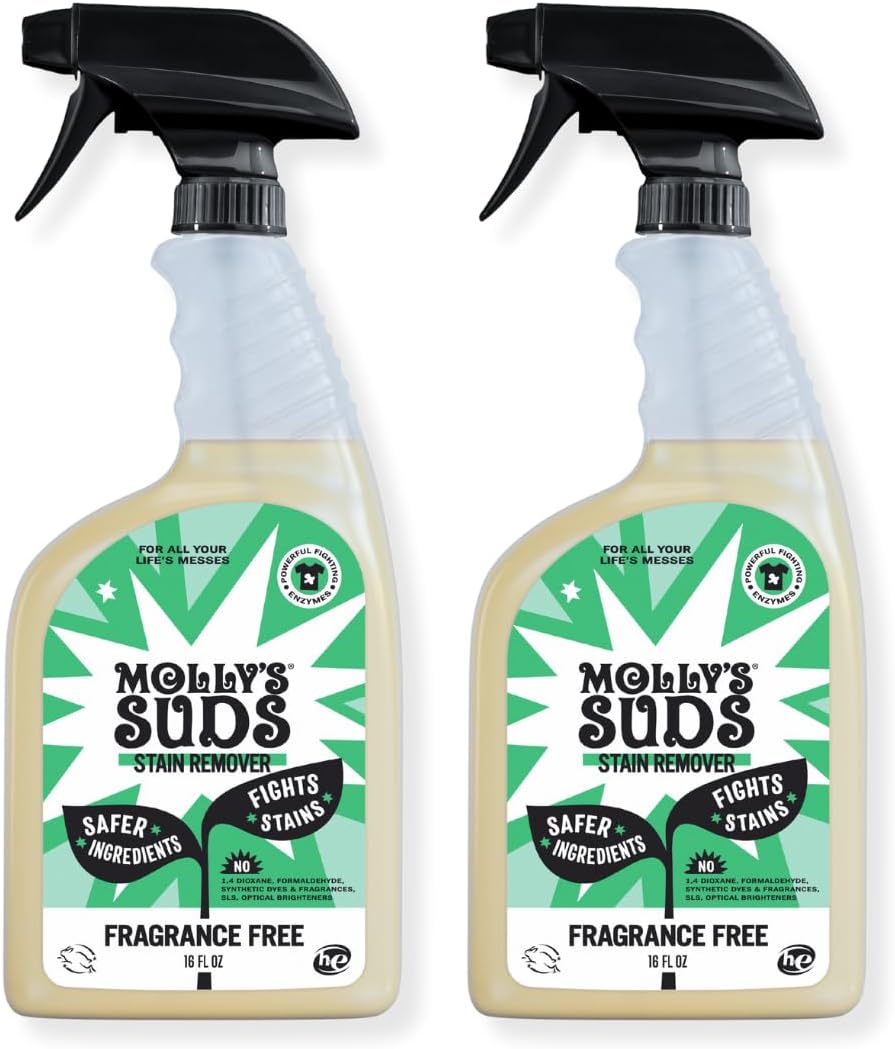
Molly's Suds Stain Remover Spray for Baby & Pet Stains

Grandma's Secret Spot Remover Laundry Spray for Clothes
Buying Guide for Laundry Stain Removers and Boosters
Choosing a stain product starts with the stain and the fabric, not the brand. Match the form to how many marks you treat, and check how the product handles washable clothing before using it on delicate pieces.
Stain Type and Fabric
Look at the stain first, such as food, oil or everyday dirt, and the fabric under it. Delicate fabric calls for a gentle approach and a test on a hidden spot. Shout and OxiClean suit washable clothing, while the DirtyLabs booster fits regular loads.
Spray Versus Gel Stick Form
A spray spreads over a wider area, which helps with larger marks, while a gel stick stays put on one spot. Choose a spray when the stain covers a large section of fabric. The OxiClean gel stick fits small, localized marks, and the Shout spray covers more ground.
Enzyme Formulas for Common Stains
Enzyme formulas are designed to work on protein and starch-based marks, so look for enzyme in the product name when that matches your stains. Shout and DirtyLabs both list enzyme formulas. Follow the label for dwell time before washing.
Wash Boosters Versus Spot Treatments
A wash booster adds to the cycle and works across the whole load, while a spot treatment targets one mark before washing. If you only need to treat a few stains, a spot product is more direct. The DirtyLabs booster suits households that want a scent-free addition for regular laundry. Households dealing with frequent pet accidents on carpet may find a spot cleaner machine handy for quick work.
Laundry Stain Remover Questions and Answers
How do I remove an old stain from washable clothes?
Start by rinsing the garment in cool water to loosen the stain, then apply a stain remover directly to the mark. Let it sit for the time the label gives, then wash as usual. Old stains may need more than one treatment before they lift, and heat can set some stains, so check the stain before drying.
Should I test a stain remover on a hidden area first?
Yes, testing on a hidden seam or inside hem helps you check for color change or fabric damage before treating the visible stain. This matters most for delicate, dyed or specialty fabrics. Follow the product label for the exact test and contact time. Furniture fabric often needs a spot cleaner for upholstery that suits its material and backing.
Can I use a spot treatment and a wash booster together?
Read the product labels for each item and follow their directions for use and order. Some households use a spot treatment before washing and a booster in the cycle, but labels may give specific instructions that differ between products.
How should I store a laundry stain remover?
Keep the product in its original container, closed tightly, and away from direct sunlight and heat. Store it out of reach of children and pets. Gel sticks should have the cap replaced after each use so the product does not dry out.
Do enzyme stain removers work on every type of stain?
Enzyme formulas are designed for certain stain types, mainly those made from proteins and starches, so they will not treat every mark equally well. Oil-based or dye stains may need a different approach. Check the product label for the stains it is made to treat.


