Best Japanese Frying Pan buyers start with how they cook most often. A nonstick omelette pan suits egg lovers because its sloped front makes rolling simple. A deep iron skillet fits sear fans because its extra depth holds steak and stir-fry ingredients. A stainless deep fryer pot works for tempura fans because its temperature gauge tracks oil heat. Carbon steel pans appeal to cooks who want a seasoned surface that improves with use. A square frying pan suits cooks who make rolled eggs because its straight sides keep layers neat.
TECHEF Tamagoyaki Pan suits breakfast cooks because its aluminum body spreads heat evenly across the cooking surface. MITSUMOTO Iron Skillet suits one-pan meal makers because its deep iron body gives more room than a shallow skillet. cuomaop Deep Fryer Pot suits home fryers because its removable oil rack drains grease after cooking. バリューサークル Carbon Steel Pan suits precision cooks because its chef-designed shape supports controlled sautéing. TAROYAKI Carbon Steel Pan suits small kitchens because its 7.87-inch body is lightweight and easy to lift.
Our Top Picks

Even-Heat Nonstick Pick: TECHEF Tamagoyaki Japanese Omelette Pan with Induction-Ready
The forged heavy-gauge aluminum body distributes heat evenly and prevents hot spots during cooking. The sloped front and straight sidewalls make it easy to flip and roll omelets without breaking them. The 3-layer reinforced Teflon nonstick coating contains no PFOA, cadmium, or lead, so food releases with little oil. It works for fried eggs, sandwiches, pancakes, steak, and vegetables beyond tamagoyaki. The induction-ready forged base resists warping and wobbling on electric, gas, ceramic, and induction stoves. This pan suits cooks who want a versatile nonstick surface for daily egg dishes. Choose another pick here if you prefer a seasoned metal surface without synthetic coating.
Deep Iron Skillet for Searing: MITSUMOTO SAKARI 10-Inch Japanese Iron Skillet with Flat
The deep iron frying pan provides more cooking room than a shallow skillet for steak, eggs, fried rice, stir fry, vegetables, and one-pan meals. Its iron cooking surface has no synthetic coating and develops its own seasoning through oil, heat, and repeated use. The flat bottom supports stable contact on gas, induction, and electric cooktops for quick heating and fast temperature response. The hammered iron surface spreads oil and reduces direct food contact to help eggs, meat, rice, and vegetables release smoothly. The ebony wood handle includes grip grooves, rivets, and a hanging ring for steady control and easy storage. This pan suits cooks who want a large, uncoated surface for searing and sautéing. Pick another option here if you need a nonstick coating right out of the box.
Deep Fryer with Temperature Gauge: cuomaop Deep Fryer Pot with Oil Drain and
The 304 stainless steel pot is durable and provides excellent heat insulation for frying many foods. It handles french fries, chicken nuggets, tempura, squid, shrimp, peanuts, and fish with ease. The pot works on gas, electric, and induction cooktops and supports frying, boiling, stewing, and simmering. A temperature gauge lets you monitor oil heat precisely for the best taste, and an oil level indicator helps minimize waste. The removable oil drip rack drains excess grease, while the beak diversion spout and cold-touch handle make pouring used oil safe. Mirror polishing makes the pot easier to clean and less likely to leave residue. Its compact 9.4-inch diameter saves kitchen space, though the thermometer should be wiped with a paper towel rather than washed with water.
5 Frying Pans Compared by Material and Size
Compare the cooking surface, depth, stove fit, handle style, and care needs across every model. Some pans use aluminum with a nonstick layer, while others rely on bare iron or carbon steel that builds its own release over time. Sizes range from a small 7.87-inch single-egg pan to a 10-inch skillet that handles family portions.
TECHEF Tamagoyaki Japanese Omelette Pan with Induction-Ready Base
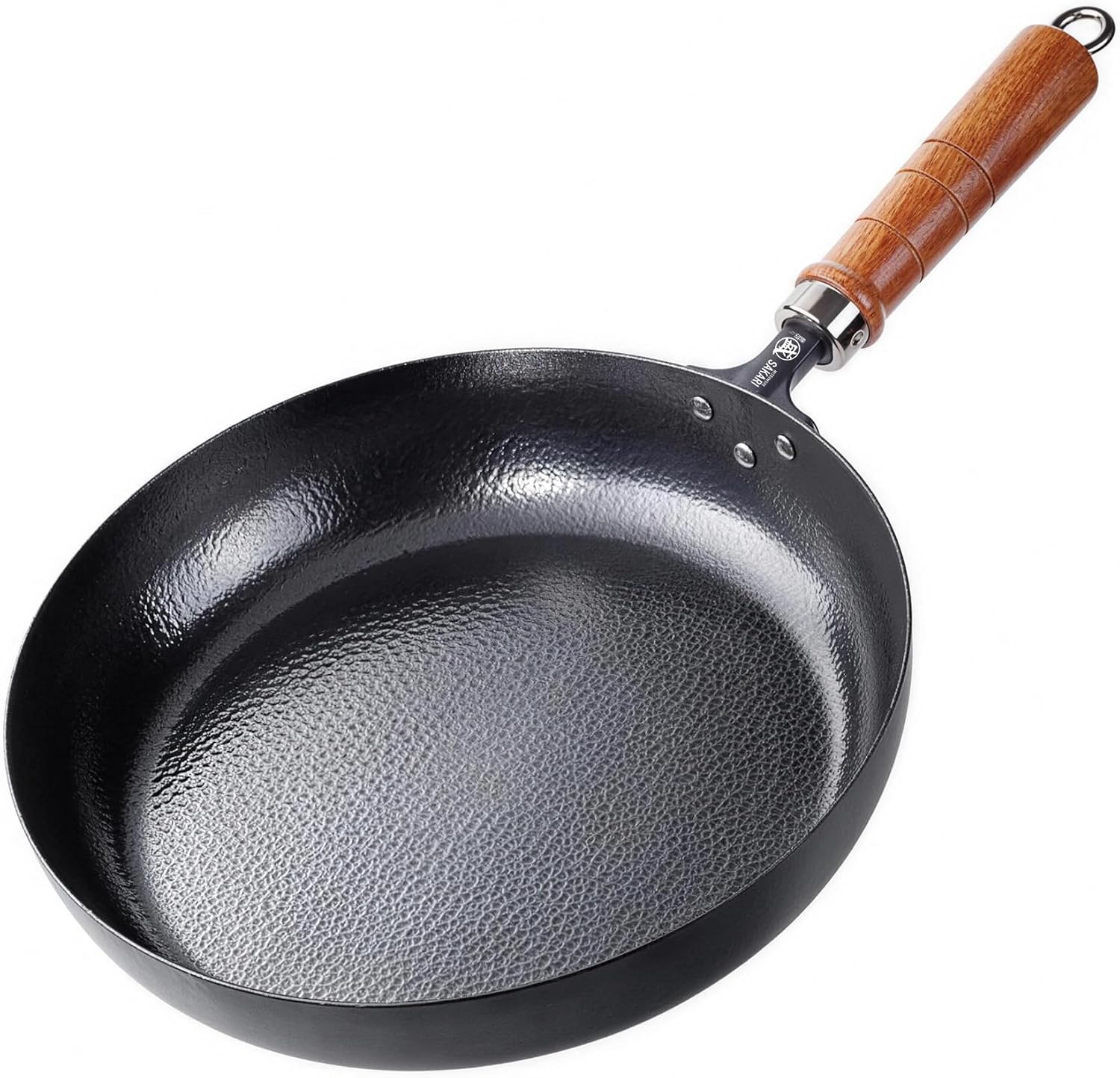
MITSUMOTO SAKARI 10-Inch Japanese Iron Skillet with Flat Bottom
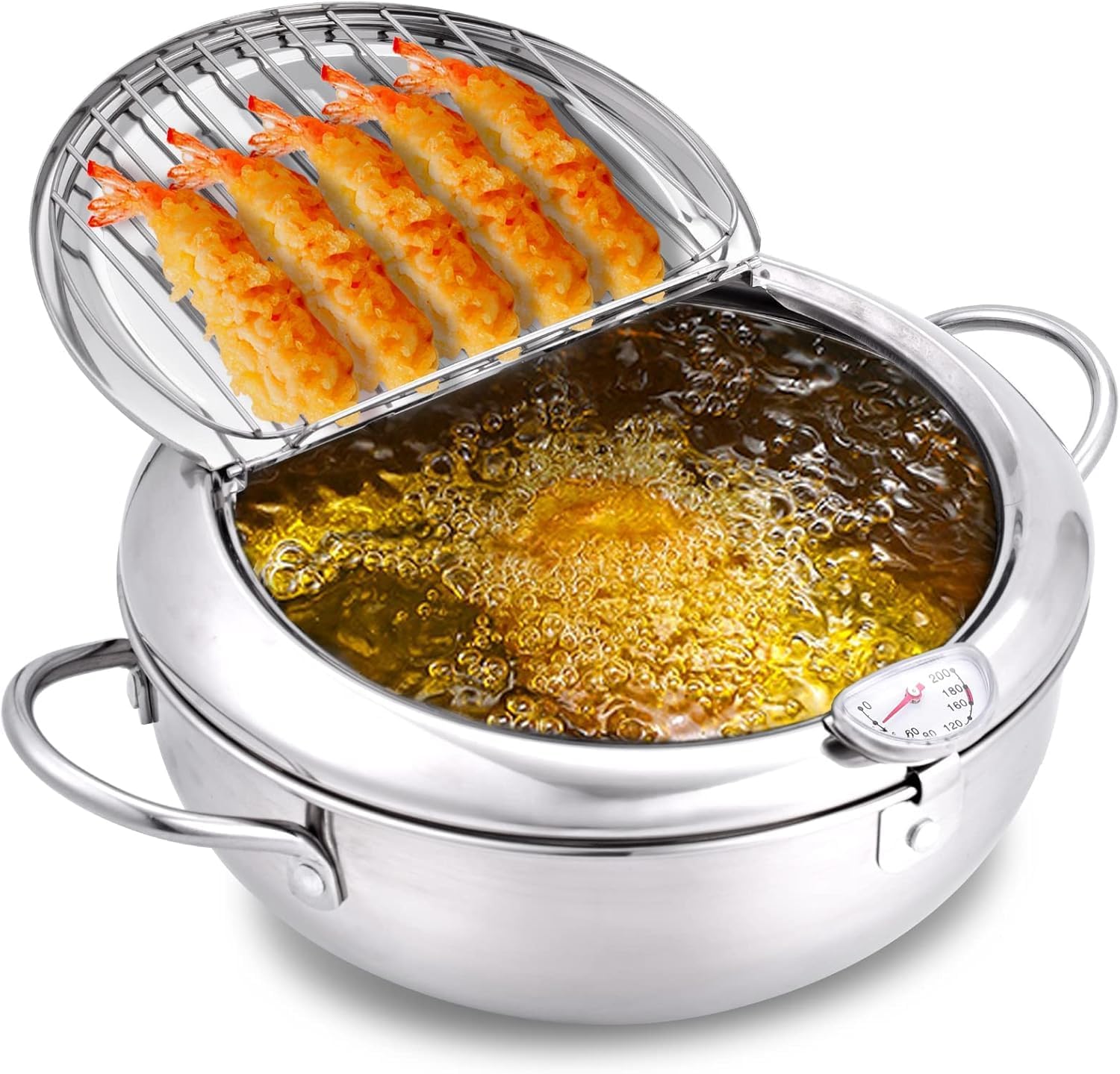
cuomaop Deep Fryer Pot with Oil Drain and Temperature Control

バリューサークル Japanese Carbon Steel Frying Pan with Precision-Formed Construction

TAROYAKI 7.87 Inch Nitrided Carbon Steel Frying Pan
How to Choose the Right Japanese Frying Pan
Your cooking style and stove type determine which pan works best in your kitchen. Think about whether you want a ready-to-use nonstick surface or a bare metal pan that builds seasoning over time. Size and depth matter just as much as material when you plan daily meals. Your breakfast routine may call for a rectangular tamagoyaki pan that shapes rolled omelets neatly.
Cooking Surface and Coating
TECHEF Tamagoyaki Pan uses a 3-layer reinforced Teflon nonstick coating with no PFOA, cadmium, or lead for easy food release. MITSUMOTO Iron Skillet relies on bare iron that develops seasoning through oil, heat, and repeated use instead of a synthetic layer. cuomaop Deep Fryer Pot uses 304 stainless steel for frying rather than a nonstick cooking surface. バリューサークル Carbon Steel Pan arrives pre-seasoned with no Teflon-style coating, so proper heat and oil help food release. TAROYAKI Carbon Steel Pan features nitrided carbon steel with no synthetic nonstick layer and a surface that darkens into a patina with regular cooking. Nonstick surfaces suit cooks who want minimal oil and quick cleanup. Bare metal surfaces suit cooks who enjoy maintaining a pan that improves over years of use.
Size and Depth
TECHEF Tamagoyaki Pan has a sloped front and straight sidewalls designed for rolling omelets and other small dishes. MITSUMOTO Iron Skillet is a 10-inch deep iron pan that gives more cooking room than a shallow skillet for family portions. cuomaop Deep Fryer Pot has a compact 9.4-inch diameter that saves kitchen space while holding enough oil for frying. バリューサークル Carbon Steel Pan measures 20 centimeters, or about 7.9 inches, with a depth of 4 centimeters for sautéing and searing. TAROYAKI Carbon Steel Pan is 7.87 inches with a 5.7-inch flat base sized for a single fried egg or small omelet. Shallow pans work well for eggs and quick sautés, while deep pans hold stir-fry and one-pan meals without crowding. Small pans suit single servings, and large pans suit cooking for several people at once.
Stove Compatibility
TECHEF Tamagoyaki Pan has an induction-ready forged base that works on electric, gas, ceramic, and induction stoves without warping. MITSUMOTO Iron Skillet has a flat bottom for stable contact on gas, induction, and electric cooktops. cuomaop Deep Fryer Pot is compatible with gas, electric, and induction cooktops for frying and simmering. バリューサークル Carbon Steel Pan has a flat base that works on induction, gas, and electric cooktops. TAROYAKI Carbon Steel Pan has a flat base that works on induction, gas, and electric cooktops for searing and finishing under a lid. Flat bases transfer heat efficiently and keep the pan steady during cooking. Match the pan base to your stove type so the surface heats quickly and responds to temperature changes.
Handle and Storage
TECHEF Tamagoyaki Pan is built for easy flipping and rolling with its shaped sidewalls. MITSUMOTO Iron Skillet has an ebony wood handle with grip grooves, rivets, and a hanging ring for steady control and storage. cuomaop Deep Fryer Pot has a cold-touch handle and a beak diversion spout for safe pouring of used oil. バリューサークル Carbon Steel Pan has a walnut wood handle that provides a secure grip while reducing wrist strain. TAROYAKI Carbon Steel Pan has a natural wood handle secured with a stainless steel mount and rivets, plus a loop for hanging. Wood handles stay cooler than metal but should be kept clear of open flames. A hanging ring or loop makes it easy to store the pan without taking up cabinet space.
Care and Seasoning
TECHEF Tamagoyaki Pan needs gentle care to protect its 3-layer nonstick coating during cooking and cleaning. MITSUMOTO Iron Skillet improves food release as seasoning builds through oil, heat, and repeated use with proper care. cuomaop Deep Fryer Pot has a mirror-polished stainless body that is easier to clean and less likely to leave residue, and its thermometer should be wiped with a paper towel rather than washed with water. バリューサークル Carbon Steel Pan arrives pre-seasoned and ready to use, with performance that improves as seasoning develops with continued use. TAROYAKI Carbon Steel Pan requires hand washing, thorough drying, and light oiling before storage to protect its nitrided surface. Nonstick pans need no seasoning but benefit from non-metal utensils to preserve the coating. Iron and carbon steel pans suit cooks who want to maintain a surface that gets better the more it is used.
Common Questions About Japanese Frying Pans
What can I cook in a Japanese frying pan?
You can cook eggs, steak, vegetables, fried rice, stir-fry, and tempura depending on the pan you choose. TECHEF Tamagoyaki Pan works for fried eggs, sandwiches, pancakes, steak, and vegetables beyond omelets. MITSUMOTO Iron Skillet handles steak, eggs, fried rice, stir fry, vegetables, and one-pan meals in its deep iron body. cuomaop Deep Fryer Pot fries french fries, chicken nuggets, tempura, squid, shrimp, peanuts, and fish with its temperature gauge. Match the pan depth and surface to the dish you make most often.
How do I season a carbon steel or iron pan?
Seasoning builds when you heat oil in the pan and repeat the process over several cooking sessions. MITSUMOTO Iron Skillet develops its own seasoning through oil, heat, and repeated use to improve food release over time. バリューサークル Carbon Steel Pan arrives pre-seasoned and ready to cook, and its surface improves as seasoning develops with continued use. TAROYAKI Carbon Steel Pan should be seasoned as directed before first use, then hand washed, dried thoroughly, and lightly oiled before storing. A well-seasoned surface releases food more easily and resists sticking with regular care.
Can I use a Japanese frying pan on an induction cooktop?
Yes, many of these pans work on induction cooktops when they have a flat, compatible base. TECHEF Tamagoyaki Pan has an induction-ready forged base that works on induction, electric, gas, and ceramic stoves. MITSUMOTO Iron Skillet has a flat bottom for stable contact on induction and other cooktops. cuomaop Deep Fryer Pot is compatible with induction, gas, and electric cooktops. バリューサークル Carbon Steel Pan and TAROYAKI Carbon Steel Pan both have flat bases that work on induction, gas, and electric cooktops.
Why choose carbon steel over nonstick?
Carbon steel offers a bare metal surface that develops seasoning instead of relying on a synthetic coating. バリューサークル Carbon Steel Pan delivers restaurant-quality searing, crisp textures, and precise heat control with a pre-seasoned surface. TAROYAKI Carbon Steel Pan uses nitrided carbon steel to resist wear and scratches while forming a patina that helps food release. These pans handle high heat for searing steak and crisping fish skin without a nonstick layer. Choose carbon steel if you want a pan that changes and improves with your cooking habits. Carbon steel pans are heavy, so a skillet with a helper handle makes lifting safer.
Do I need special utensils for a coated frying pan?
You should use utensils that protect the coating from scratches and wear during cooking. TECHEF Tamagoyaki Pan features a scratch-resistant nonstick coating, but gentle tools help it last longer. Avoid cutting or chopping directly in the pan to keep the surface intact. Wood, silicone, or nylon utensils work well with coated and seasoned surfaces alike. Proper care keeps food release smooth whether the pan is nonstick or seasoned metal.